This article may contain affiliate links. If you buy through them we may earn a commission at no extra cost to you.
For most international flights from major US airports, arrive 3 hours before departure. That covers check-in (30–45 minutes with bags), security (20–40 minutes standard, 5–10 with PreCheck), the walk to your gate, and a 15–30 minute buffer before boarding closes. Cut below 2.5 hours and you’re betting that nothing goes sideways.
The Standard Rule: 3 Hours for International Flights
Three hours is the baseline from most major carriers and TSA guidance—and it holds up in practice. Check-in runs 30–45 minutes when lines are moderate, longer if the counter is crowded. Security adds 20–40 minutes at a typical major hub. Factor in 10–15 minutes to reach your gate, and the remaining time becomes your margin against the unexpected: a gate change, a slow X-ray machine, a customs form you didn’t know you needed.
This works for mid-size to large US airports on carriers like United, American, and Delta. Off-peak windows—Tuesday through Thursday, late afternoon—can run leaner, but we still wouldn’t drop below 2.5 hours even then.
When to Arrive Earlier: 3.5–4 Hours
Large hub airports during peak travel
At LAX, JFK, ORD, and ATL, peak morning windows (7–9 a.m. Friday in July, or any holiday departure) can eat 40+ minutes at check-in alone before you’ve touched a security line. Security at these airports regularly hits 30–45 minutes during busy periods. If your flight falls into that window, plan 3.5 hours.
First-time international travelers
International check-in differs from domestic—document verification, customs declarations, sometimes a separate counter entirely. Add 30 minutes if you’re unfamiliar with the process or the airport layout. Terminals aren’t always well-signed for international departures, and finding the right one takes longer than it should.
Checking multiple bags or traveling with a group
Online check-in doesn’t shorten the bag-drop line much. For a family of four checking two to three bags each, the counter alone can stretch to an hour—weighing, tagging, verifying documents for each passenger. Budget accordingly.
Airlines with slower check-in processes
Some international carriers operating from smaller US gateways run slower check-in due to older systems or lower staffing. Check recent traveler reviews for your specific route if you’re flying a carrier you haven’t used before.
When 2.5 Hours May Be Enough
Off-peak travel, mobile check-in, no checked bags
A Tuesday evening departure with no luggage and a boarding pass already on your phone is a different equation. Security can clear in 10–15 minutes, and the gate walk is unhurried. We’ve done this comfortably at mid-size hubs—but not at JFK on a summer Friday.
TSA PreCheck or Global Entry holders at familiar airports
PreCheck cuts security from 30 minutes to 5–10 minutes on a normal day. If you know the airport, have no checked bags, and aren’t flying during a peak window, 2.5 hours is realistic. Note that PreCheck lanes can back up during holiday travel—they’re faster, not immune.
Smaller regional airports
Airports like Providence, Austin, and San Diego handle far fewer international departures than major hubs. We’ve cleared check-in and security in under 20 minutes total at these airports during quiet periods. Verify your specific airport’s international volume before relying on this—some regional airports have limited international gates or process passengers more slowly than you’d expect.
The real risk isn’t missing your flight—it’s the fee ($75–$200) to rebook, plus the stress of running through security.
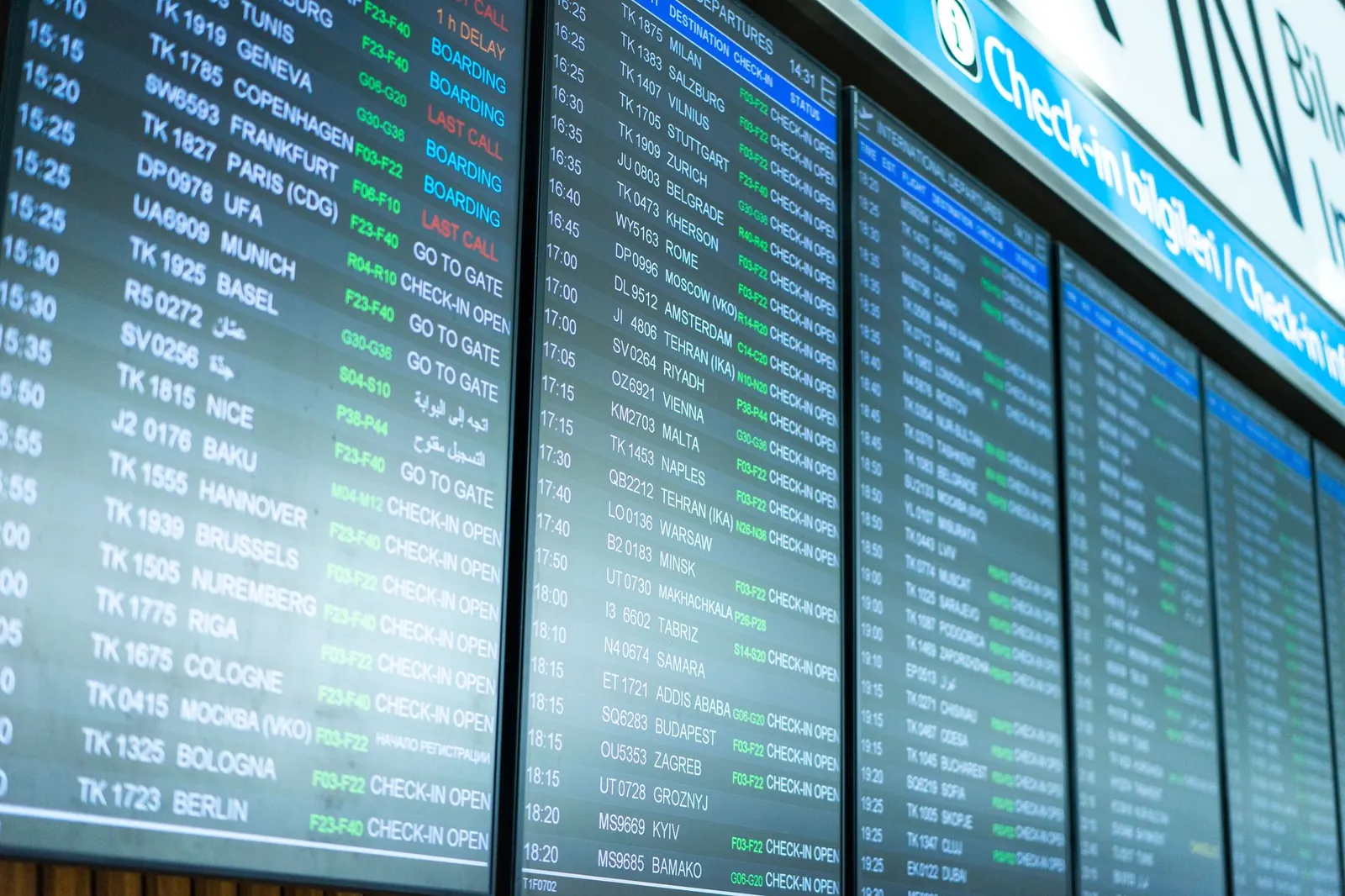
Time Breakdown: Where Your 3 Hours Actually Goes
| Task | Typical Time | Peak Time | Off-Peak Time |
|---|---|---|---|
| Check-in (with bags) | 30–45 min | 60+ min | 15–20 min |
| Security screening | 20–30 min | 45+ min | 5–10 min (PreCheck) |
| Walk to gate | 10–15 min | 15–20 min | 5–10 min |
| Buffer before boarding | 15–30 min | 10–15 min | 20–30 min |
| Total | 75–120 min | 130–180+ min | 45–70 min |
International flights board 30–45 minutes before departure, and gate changes happen without much warning. We once watched a gate reassignment post at JFK 20 minutes before boarding—anyone who’d arrived at the two-hour mark and gone straight to the original gate would have been in real trouble.
Airport-Specific Guidance
Major US hubs (JFK, LAX, ORD, ATL, DFW)
Arrive 3–3.5 hours early. Security checkpoints are sometimes split across terminals, and the walk alone can cost you 15 minutes. Check your airline’s terminal assignment before you leave home—not all carriers share terminals at these airports.
Medium hubs (SFO, MIA, BOS, SEA)
Three hours is standard. These airports run efficiently but carry real volume. We’ve rarely needed more than 3 hours here outside of peak summer travel.
Smaller regional airports (Providence, Austin, San Diego)
Two and a half hours is often enough. Shorter lines are the norm, but call ahead or check your airline’s recommendation if you’re unsure—limited international gates can create unexpected bottlenecks.
Connecting through a hub
If both flights are on the same airline and you’re staying in the same terminal, 2–2.5 hours between landing and departure is workable. Changing airlines or terminals at a large hub warrants 3 hours minimum. We’ve missed a connection at ORD with 1.5 hours to spare because the first flight ran late and the connecting gate was in a different terminal.
How to Check Real Wait Times Before You Go
Spend two minutes on this before leaving home:
- TSA Wait Times: tsa.gov updates security wait times hourly for most major airports.
- Airline apps: United, American, and Delta show current security wait times in their mobile apps.
- Airport websites: Many publish real-time queue data and average wait times by hour.
- Flighty or similar apps: Track actual gate and boarding information for your specific flight.
If TSA is showing 45+ minutes, add 30 minutes to your plan. Under 10 minutes, you have room to breathe.
Common Mistakes We See
Treating online check-in as a time-saver when you have bags. It skips the document-verification queue, but you still stand in the bag-drop line. The time savings is real but modest—maybe 10–15 minutes, not 30.
Forgetting customs or agricultural declaration forms. Some routes require paper forms that aren’t available online. Budget 5–10 minutes if your destination requires them, and don’t assume the gate agent will have extras.
Counting airport arrival time as gate time. Three hours from curb to departure means three hours from when you step out of the car or rideshare—not from when you left home. A 45-minute parking search or a long rideshare queue eats directly into your buffer.
Assuming a quiet airport means a fast airport. A single malfunctioning X-ray machine can back up a small security checkpoint by 20 minutes. Smaller airports have fewer redundancies, not more.
For more detail on specific airports, see our guide to airport security time requirements by airport. New to international travel? Our international flight tips guide covers what else to have ready before you reach the counter.
Frequently asked questions
Do I need to arrive 3 hours early if I have TSA PreCheck?
Usually 2–2.5 hours is enough with PreCheck or Global Entry, provided you have no checked bags and you’re flying off-peak. Security drops from 30 minutes to 5–10 minutes. During peak travel—summer mornings, major holidays—PreCheck lanes can still back up, so 2.5 hours is the safer floor.
What if my flight departs at 6 a.m.?
Arrive 3–3.5 hours early. Early departures draw business travelers and families trying to maximize their day, so security lines run heavy. Airports also staff fewer agents in the early hours, which compounds the slowdown. In our experience, 6–7 a.m. departures rank among the busiest screening windows of the day.
Can I arrive less than 3 hours early if the airport looks quiet?
Technically yes—but the margin for error disappears. Even at a quiet airport, check-in systems stall, bags get flagged, gates change. We wouldn’t go below 2.5 hours under any circumstances, including a Tuesday at 10 p.m. at a regional airport.
Does it matter whether I’m flying a US carrier or a foreign airline?
Not significantly. Check-in and security timelines are similar across carriers. Some foreign airlines operating from smaller US gateways run slightly slower at check-in—typically 10–15 minutes slower, not 30. Plan for 3 hours either way and you won’t be caught out.
What happens if I miss my flight because I arrived late?
You’ll need to rebook, and most airlines charge $75–$200 per ticket for a missed flight that’s the passenger’s fault. Airlines may waive this if their own check-in counter closed early or a system failure caused the delay—but not for a late arrival. Travel insurance can cover missed flights in some circumstances, depending on the policy terms.

Tomas is a former airline route planner who now writes about fares, airports and getting there without the drama.