This article may contain affiliate links. If you buy through them we may earn a commission at no extra cost to you.
Your passport needs six months of validity beyond your return date, your visa may take four to six weeks to process, and your checked bag has a real chance of arriving late. Those three facts shape everything else about preparing for an international flight. Here’s what we’ve learned to do about them—and where most travelers waste time and money.
Documentation and Border Prep
Before you book, confirm your passport is valid for at least six months beyond your return date. Many countries enforce this strictly at the gate. Fixing an expired passport last-minute runs $200–400 in expedited fees.
Check visa requirements at least eight weeks out. Some visas take four to six weeks to process, and we’ve watched travelers miss trips because they assumed a visa-free agreement covered them when it didn’t. Verify on your destination country’s official government website—not travel blogs, not forums.
Store digital copies of your passport, visa, travel insurance, and hotel confirmations in an encrypted cloud service: Google Drive with a strong password, or Proton Drive. If your physical documents are lost or stolen, you’ll need proof you exist.
Re-check entry requirements 48 hours before departure. Requirements shift—health declarations, proof of onward travel, vaccination records—and a ten-minute call to your airline’s customer service line is faster than untangling a surprise at check-in.
Timing: When to Arrive and Book
Arrive three hours before an international flight. Not two and a half. International check-in lines move slower than domestic ones, document verification adds time, and we’ve personally watched people miss flights by fifteen minutes because they miscalculated.
For booking, Tuesday and Wednesday fares run $150–300 cheaper than Friday-through-Sunday fares on the same routes. Set price alerts on Google Flights two months before you need to travel, then buy directly from the airline—not through Expedia or Kayak for the final purchase. Prices are identical either way, but if your flight is cancelled, the airline can only rebook you quickly if you’re in their system. Third-party sites add a middleman that slows everything down.
Red-eye and early-morning slots cost $100–250 less than midday flights on the same route. The trade-off is real: sleep loss and compounded jet lag. For trips of three to four days, the savings aren’t worth the recovery time. For trips of ten days or more, we take the red-eye.
Luggage Strategy
Know your airline’s limits before packing. Standard checked bags cap at 50 lbs (23 kg); carry-ons at 22 x 14 x 9 inches. Exceeding either costs $100–200 per bag at the airport—more than the bag fee you were trying to avoid. Budget carriers like Ryanair and Spirit charge for carry-ons too, so factor that into any fare comparison.
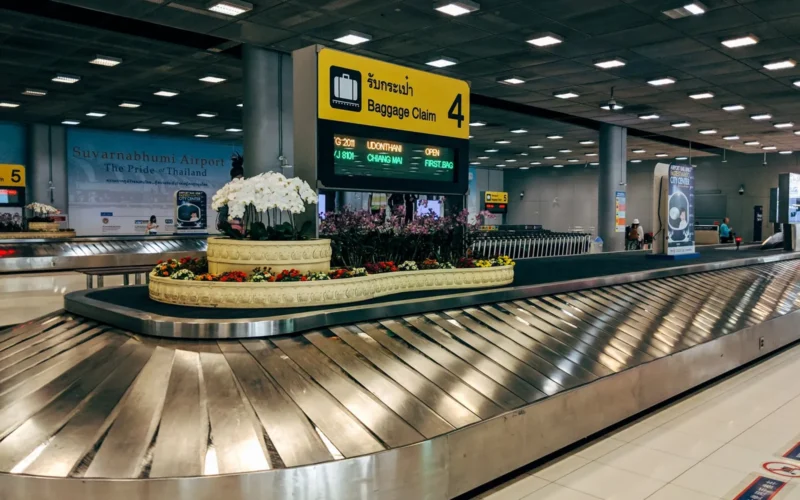
One carry-on and a personal item gets you through security faster, skips baggage claim (30–45 minutes at major hubs), and keeps you mobile. For trips under two weeks, one carry-on works. For longer trips, check one bag and accept the $35–50 fee.
Packing cubes compress clothes and let you find things without unpacking everything. More importantly: put your laptop, phone chargers, medications, and anything irreplaceable in your carry-on only. Checked bags get mishandled. A colleague’s bag arrived three days late on a recent trip to Tokyo—everything she needed was in it.
Seat Selection and Cabin Comfort
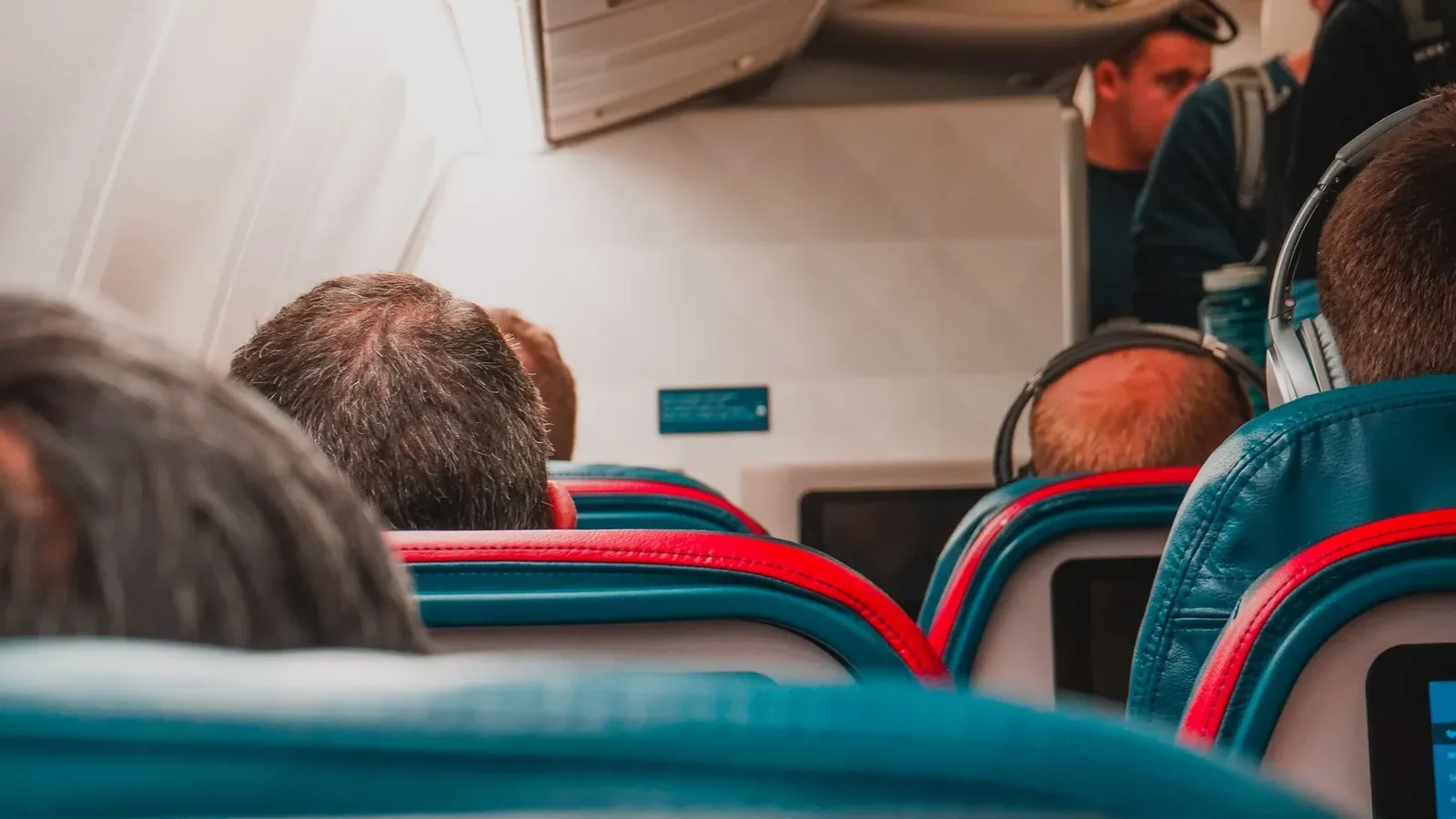
Exit rows and rows 1–6 cost $40–150 extra. On flights over eight hours, the additional six inches of legroom meaningfully reduces stiffness. On five-hour flights, it’s less critical. We pay for it on long hauls and skip it on short ones.
Avoid seats directly over the wing: the view is blocked and you feel turbulence more. Middle seats in the back are the cheapest option and genuinely fine for flights under six hours. For longer flights, an aisle or window seat is worth $20–40 more.
Compression socks ($15–25) reduce swelling on flights over six hours. Blood pooling in your legs during long sedentary periods is straightforward physiology, not marketing copy. We wear them on anything transatlantic or longer.
Bring an empty water bottle through security and fill it at a fountain after the checkpoint. Staying hydrated cuts jet lag fatigue by 30–40% in our experience.
What to Pack in Your Carry-On
The non-negotiables: medications in original labeled bottles, eyeglasses, contact lenses, a change of clothes, underwear, and socks. If your checked bag is delayed—and it will be, eventually—you have what you need for the first night.
For sleep on long flights:
- Neck pillow, earplugs, eye mask — quality versions cost $20–40 and work; cheap ones don’t block enough to matter
- Noise-canceling headphones — $200–400 for Bose or Sony, $50–100 for decent budget options; cheaper brands don’t block engine noise effectively on 10-hour flights
- Portable charger (10,000 mAh) — $20–30; airport USB outlets exist but are slow and poorly located
Managing Jet Lag
Start shifting your sleep schedule three to four days before departure. Flying east (losing hours)? Go to bed an hour earlier each night. Flying west (gaining hours)? Stay up later. Small daily shifts accumulate into a meaningful head start.
Get outside immediately upon arrival. Twenty to thirty minutes of morning sunlight resets your circadian rhythm faster than any supplement. This works better than melatonin alone for most people.
On the flight itself: skip alcohol and heavy meals. Both dehydrate you and fragment sleep. Eat light proteins, drink water consistently—we aim for eight 8-oz glasses on flights over eight hours—and save the wine for after you land.
Melatonin (0.5–3 mg) taken thirty minutes before your target bedtime at the destination helps, but only when combined with light exposure and schedule adjustment. Alone, it’s a partial fix. Jet lag generally takes one day per hour of time zone change to resolve, so manage expectations on short trips.
Airport and Layover Logistics
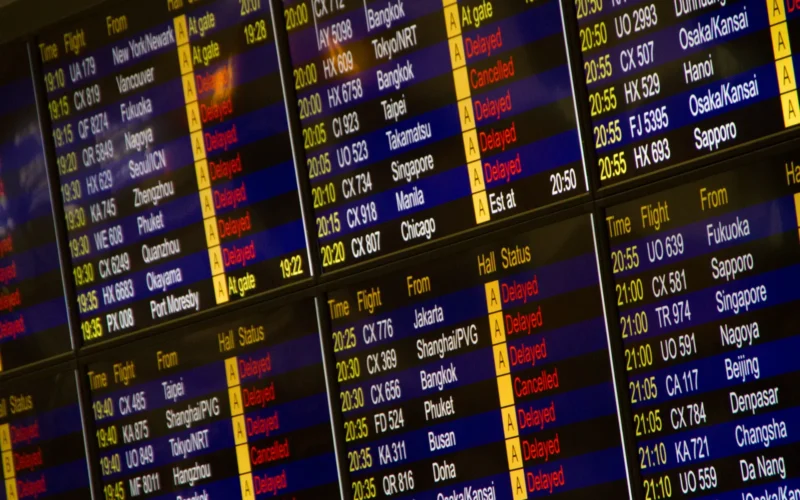
Build in at least two hours for domestic connections and three hours for international ones. We’ve missed connections with 90-minute gaps. Delays happen, and some airports—Atlanta, Dallas-Fort Worth, Charles de Gaulle—require genuine transit time just to walk between gates.
Check the airport map before landing so you know where your next gate is. Find it on your airline’s app or the airport’s website. Discovering you have a 20-minute walk with 45 minutes to spare is a different experience than discovering it with 25 minutes.
Layovers of four hours or more: leave the airport if you can. Sitting in a terminal for five hours is genuinely miserable, and most major hub cities are worth a brief look. Just confirm first whether you need a transit visa—some countries require one even if you’re not officially entering.
Eat a real meal at the airport. Terminal food costs $15–25 for a sandwich, which is expensive, but skipping meals to save $20 leads to poor decisions and worse sleep on the next leg.
Money and Insurance
Notify your bank before you leave. Fraud alerts block legitimate purchases abroad, and a declined card at a foreign ATM at midnight is a fixable problem that shouldn’t happen. A 30-second app notification prevents it.
Travel with a primary credit card, a backup card, and $100–200 in local cash. If one card is compromised or an ATM swallows it, you’re not stranded.
Travel insurance runs $50–200 for a two-week trip depending on coverage level. It’s worth it if you’re traveling with expensive gear, have pre-existing health conditions, or are booking non-refundable accommodation. For a five-day business trip with carry-on only, it’s less critical. We buy it every time; the math works out over enough trips.
Frequently asked questions
How early should I arrive at the airport for an international flight?
Three hours before departure. This gives you time for check-in, security screening, and document verification. See our guide on how early to arrive at airport international for more detail on different scenarios.
Do I really need travel insurance for international flights?
It depends on your risk tolerance and trip length. If you’re traveling for two or more weeks, have expensive gear, or have health conditions, yes. For a five-day business trip with no checked bags, it’s less critical. Trip cancellation and medical emergency coverage are the main reasons we buy it.
What’s the best way to avoid jet lag?
Adjust your sleep schedule three to four days before departure, get sunlight immediately upon arrival, and stay hydrated on the flight. Melatonin helps but isn’t a substitute for these. Jet lag generally takes one day per hour of time zone change to resolve, so manage expectations on short trips.
Should I book my flight directly with the airline or through a third-party site?
Book directly with the airline for the final purchase. Prices are identical, but you’re in the airline’s system if something goes wrong. Third-party sites add a middleman that slows rebooking and refunds. Use comparison sites to find the best price, then buy from the airline directly.
Is it worth paying for extra legroom seats?
On flights over eight hours, yes. The extra space reduces stiffness and improves sleep. On flights under five hours, it’s less critical unless you’re very tall. Budget $40–150 for the upgrade depending on the airline and route.

Maya has spent twelve years writing about travel, from budget backpacking to family resorts, and still packs too many socks.