This article may contain affiliate links. If you buy through them we may earn a commission at no extra cost to you.
Most major U.S. carriers — Delta, United, American, Southwest — share a 22 × 14 × 9 inch carry-on limit. Spirit and Frontier require a smaller bag (21.5 × 13.5 × 8.5 inches), and regional jets can reject bags that fit fine on a 737. The difference between a smooth boarding and a $35 gate-check fee usually comes down to half an inch and which aircraft you’re actually on.
Major U.S. Carriers: The 22 × 14 × 9 Standard
Delta, United, American, and Southwest all enforce the same carry-on limit: 22 inches × 14 inches × 9 inches (56 cm × 36 cm × 23 cm). That translates to roughly 4,500 cubic inches — the overhead bin standard for narrow-body aircraft like the Boeing 737 and Airbus A320.
How enforcement actually differs
- Southwest is the most lenient. They allow two free carry-ons (a roller bag and a personal item), and gate agents rarely pull out a sizer unless your bag is visibly oversized.
- United and American measure more consistently, especially on full flights. We’ve watched bags get flagged that were technically within limits but looked stuffed.
- Delta sits in the middle. Roller bags get occasional scrutiny; personal items almost always pass without comment.
All four allow a personal item — purse, laptop bag, small backpack — in addition to your carry-on. There’s no official size limit on personal items at most carriers, but it must slide under the seat in front of you.
Budget Airlines: Stricter Limits and Fees That Compound
Budget carriers are aggressive about enforcement because overhead bin space is a revenue lever. Expect a sizer frame at the gate on any full flight.
| Airline | Carry-On Size | Personal Item | Notes |
|---|---|---|---|
| Spirit | 21.5 × 13.5 × 8.5 in. | Not included on basic fares | Personal item runs $25–$35 extra; carry-on included with most paid fares |
| Frontier | 21.5 × 13.5 × 8.5 in. | $30–$40 fee | Same dimensions as Spirit; smallest carry-on among major U.S. carriers |
| Allegiant | 22 × 14 × 9 in. | $15–$25 fee | Matches major carriers on size but charges for personal items on basic fares |
| Southwest | 22 × 14 × 9 in. | Free | Two free carry-ons; most permissive policy among budget options |
Spirit and Frontier’s bags are half an inch narrower and shorter than the industry standard. We’ve seen bags sail through Southwest boarding get rejected at a Spirit gate. If you fly either carrier more than occasionally, buy a bag built specifically to their 21.5 × 13.5 × 8.5 inch spec rather than assuming your standard carry-on will squeak through.
A bag that fits the overhead bin on a Boeing 737 may not fit on a regional jet, so airline and aircraft type both matter.
International Carriers and Transatlantic Routes
Most European and Asian carriers use the same 22 × 14 × 9 inch IATA standard, but a few long-haul operators allow slightly larger bags — and enforcement on international routes tends to be looser, partly because checked baggage is often included in the fare.
Common international limits
- Lufthansa, Air France, KLM: 22 × 14 × 9 inches — identical to U.S. carriers
- British Airways: 22 × 18 × 10 inches on long-haul routes — meaningfully more generous in the width dimension
- Emirates, Qatar, Singapore Airlines: 22 × 15 × 10 inches in premium economy and above
- Japanese and Korean carriers (ANA, JAL, Korean Air): 22 × 14 × 9 inches, strictly enforced at check-in, not just the gate
The extra inch British Airways allows on wide-body routes isn’t trivial — it’s the difference between fitting a packing cube flat versus on its side. Verify your specific airline’s page before you pack; the rules shift by route and cabin class.
Regional Aircraft: The Hidden Complication
Some airlines operate regional jets — CRJ-900s, ERJ-175s — on shorter domestic routes, and these aircraft have smaller overhead bins. The airline may publish a 22 × 14 × 9 inch limit, but the bin physically won’t accommodate a fully packed bag at those dimensions.
If you’re flying a route like Denver to Omaha or Boston to Burlington, check your airline’s website for the aircraft type before you leave home. On a confirmed regional jet, checking your bag for $25–$35 is worth it. Gate-checking under pressure — repacking at the jetway while a line forms behind you — costs more in stress than the fee saves.
Bag Choice and Packing Within the Rules
Hard-sided vs. soft bags
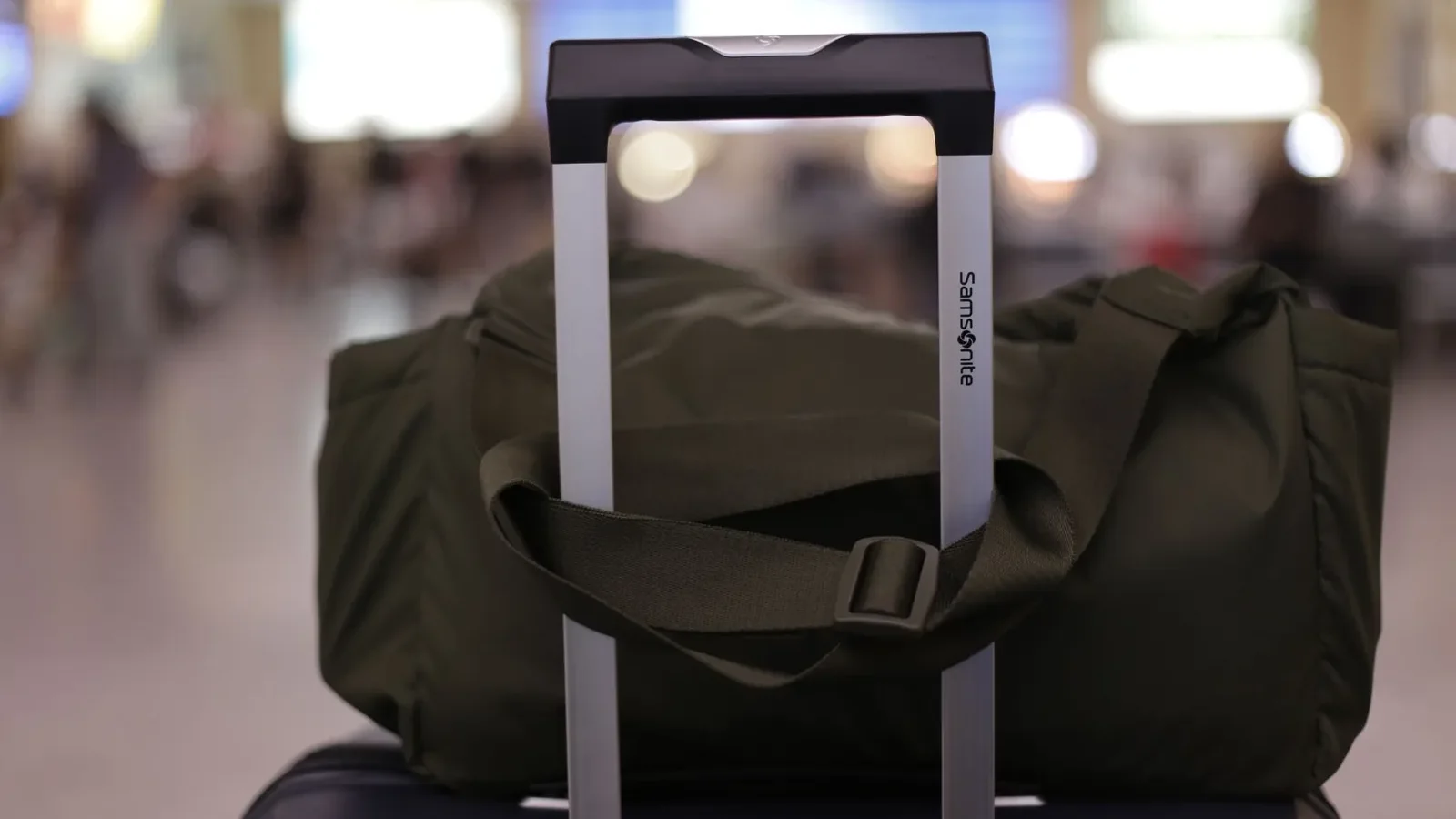
Hard-sided spinner suitcases hold their shape, which means they won’t accidentally exceed their stated dimensions when packed. Soft bags are lighter and cheaper ($40–$80 versus $150–$300 for a quality hard case), but they’re easy to overstuff, and an overstuffed soft bag looks large even when it technically isn’t. Brands like Away, Samsonite, and Coolife make reliable 22 × 14 × 9 bags that consistently clear gate sizers. Look for bags carrying the IATA “OK to Fly” tag — it certifies the dimensions.
If you use a soft bag, leave exterior pockets empty or lightly packed. A bulging front pocket is what catches a gate agent’s eye.
Weight limits matter too
Most airlines cap carry-on weight at 25–35 pounds (11–16 kg). A fully packed hard-sided carry-on with electronics and toiletries can easily hit 28–32 pounds. Weigh your bag at home. If it’s over 30 pounds, move something to your personal item — which typically has no weight limit as long as you can lift it yourself.
For more on fitting a week into a single bag, see our guide on efficient packing techniques.
How to Avoid a Gate Check
You can’t control whether the overhead bins are full, but you can control whether your bag passes the sizer.
- Measure at home. Use a tape measure against your airline’s published dimensions. If it clears on your bedroom floor, it’ll clear at the gate.
- Board early. Bins fill from front to back. Boarding group 1 or 2 means space; group 8 or 9 means a gate check is likely regardless of bag size.
- Keep your personal item genuinely small. A full-size tote or duffel as a personal item invites agents to ask you to consolidate — which means gate-checking your roller bag. A backpack under roughly 10 × 7 × 5 inches draws no attention.
- Don’t pack to capacity. A bag at 90% capacity compresses slightly in the bin. At 100%, it won’t compress and may not fit even if the empty bag would.
Our verdict
For most U.S. domestic travel, a hard-sided 22 × 14 × 9 inch bag from a reputable brand will clear every gate check on Delta, United, American, and Southwest. Spirit and Frontier require a smaller bag — 21.5 × 13.5 × 8.5 inches — so if you fly them regularly, buy to their spec or plan to check luggage. On regional jets, consider checking regardless of what the airline’s size policy says. Southwest is the most permissive carrier overall; United and American enforce most consistently. Soft bags work, but only if you resist the urge to overstuff them.
Frequently asked questions
Can I bring a personal item in addition to my carry-on?
Yes, on all major U.S. airlines. You can bring one personal item (purse, small backpack, laptop bag) plus one carry-on roller bag. The personal item must fit under the seat in front of you; there’s no official size limit, but in practice it needs to be under roughly 10 × 7 × 5 inches to fit comfortably. Budget airlines may charge $15–$40 extra for a personal item on basic fares — check your airline’s website before booking.
What happens if my bag is rejected at the gate?
The gate agent will direct you to check it. Your bag goes into the cargo hold, and on connecting flights you’ll collect it at your final destination, not at the connection. Gate checks cost $25–$50 on most airlines, though airlines sometimes waive the fee when bins are full through no fault of yours. Keep medications, valuables, and electronics in your personal item regardless — those stay with you.
Do budget airlines really enforce carry-on limits more strictly?
Yes. Spirit and Frontier use sizer frames on nearly every full flight. We’ve watched gate agents reject bags that were within the stated dimensions but looked overstuffed. If you fly either carrier more than occasionally, buy a bag certified to their exact 21.5 × 13.5 × 8.5 inch dimensions rather than assuming a standard 22 × 14 × 9 bag will pass.
Can I bring a carry-on on a regional jet?
Usually yes, but regional jets (CRJ-900, ERJ-175) have smaller overhead bins than narrow-body aircraft. A bag that fits on a 737 may not fit on a regional jet even if the airline publishes the same size limit. Check your airline’s website for the aircraft type on your specific route. If it’s a regional jet and your bag is at maximum dimensions, the $25–$35 check fee is worth avoiding a gate-check scramble.
What’s the difference between carry-on and cabin baggage?
Nothing — they’re the same thing. Carry-on, cabin baggage, and hand luggage all refer to the bag you bring into the aircraft cabin. Checked baggage goes in the cargo hold. International airlines tend to use “cabin baggage” in their policies, but the size rules are identical to what U.S. carriers call a carry-on.

Maya has spent twelve years writing about travel, from budget backpacking to family resorts, and still packs too many socks.