This article may contain affiliate links. If you buy through them we may earn a commission at no extra cost to you.
The difference between arriving with wrinkled chaos and organized calm is how you pack. Efficient packing isn’t about fitting everything in — it’s about choosing what matters and arranging it so you can actually find it. Here’s what works across dozens of trips.
Choose the Right Luggage Size for Your Trip
Pick luggage that matches your trip length and airline rules before you start folding anything. A standard carry-on roller (22×14×9 inches) handles up to five days if you pack lean. A checked bag (28×20×12 inches) gives you room for one to two weeks. Oversized luggage tempts you to pack things you won’t use, and it’s harder to move through airports and cobblestone streets.
A larger bag doesn’t mean a better trip. In Portugal, we watched travelers with 32-inch suitcases struggle up hostel stairs while we moved through with a carry-on and a small backpack. If you’re still deciding on a bag, our guide to travel luggage under $100 covers solid mid-range options that last.
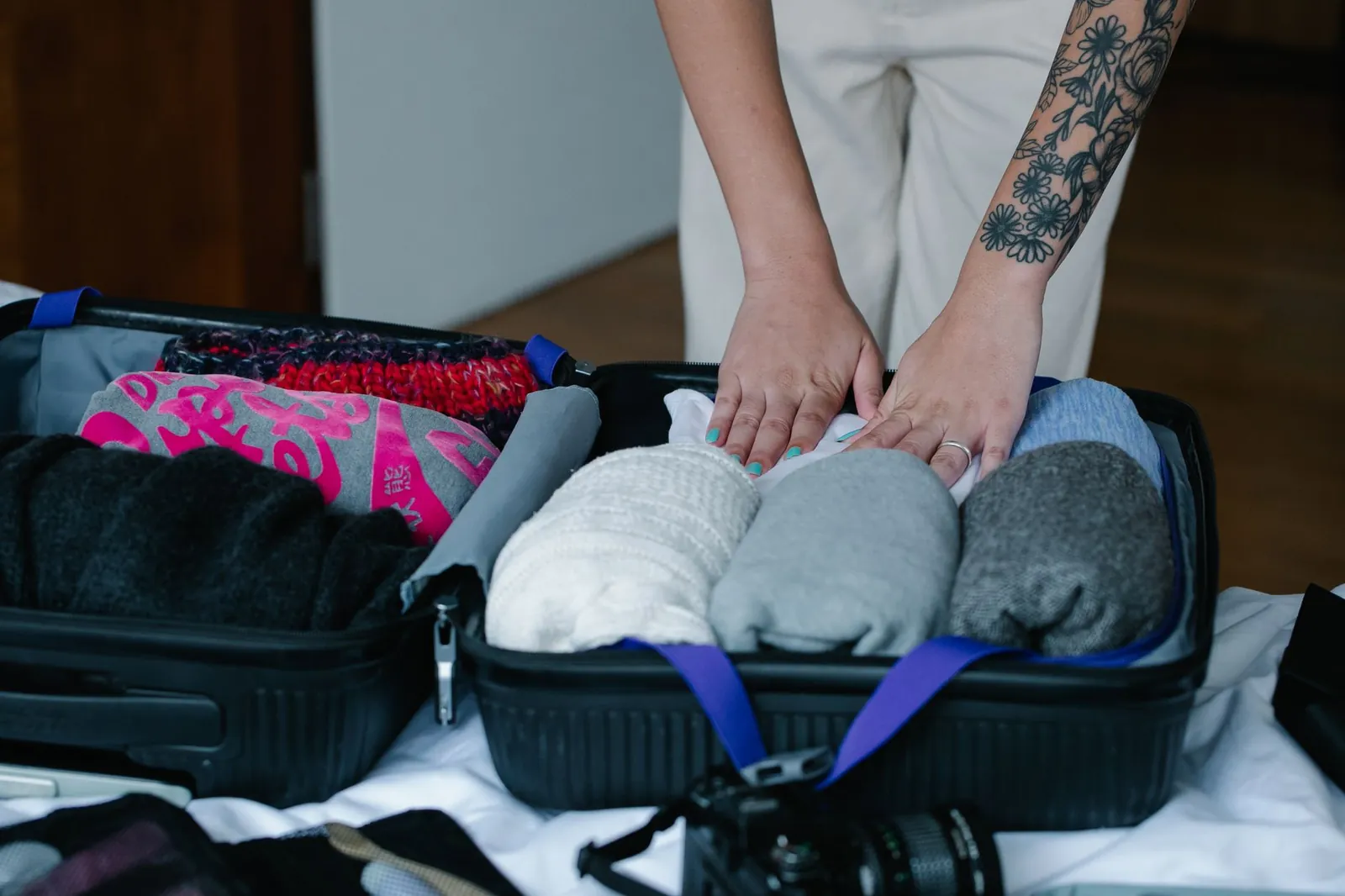
Roll, Don’t Fold
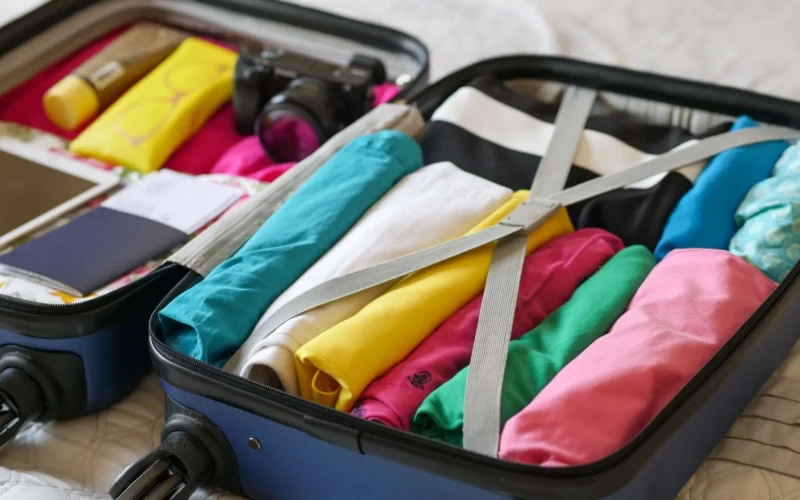
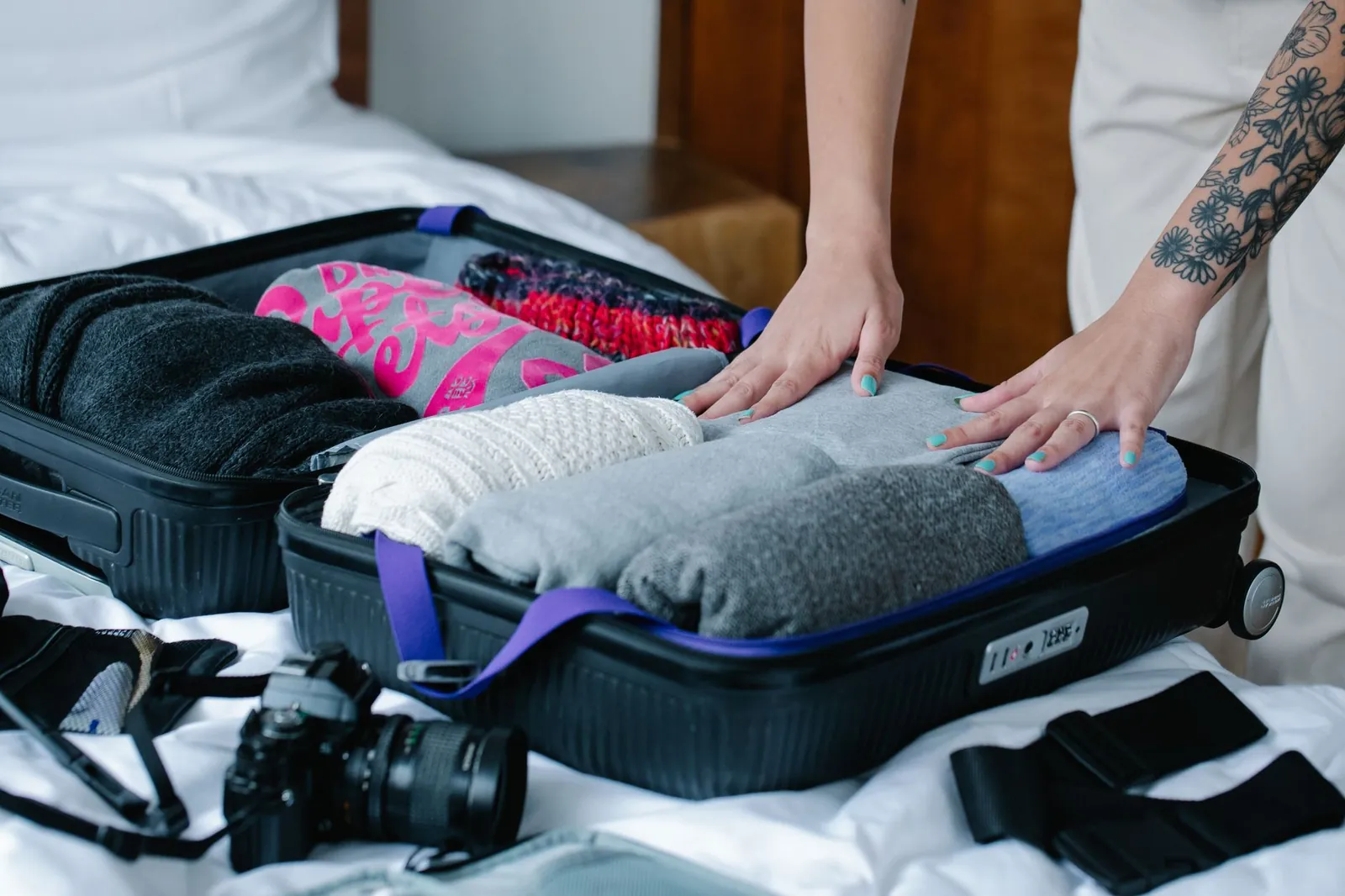
Rolling clothes compresses them better than folding and reduces wrinkles on most fabrics. Start with heavier items — jeans, sweaters — then roll lighter layers on top. For dress shirts or blazers, lay them flat first, then roll loosely to avoid deep creases.
The Military Roll Technique
Fold the item in half lengthwise, then roll tightly from the collar or waistband down. It saves roughly 30% more space than standard rolling and keeps things neater inside cubes. It takes a few tries to feel natural, but after that it’s automatic.
Use Packing Cubes or Compression Bags
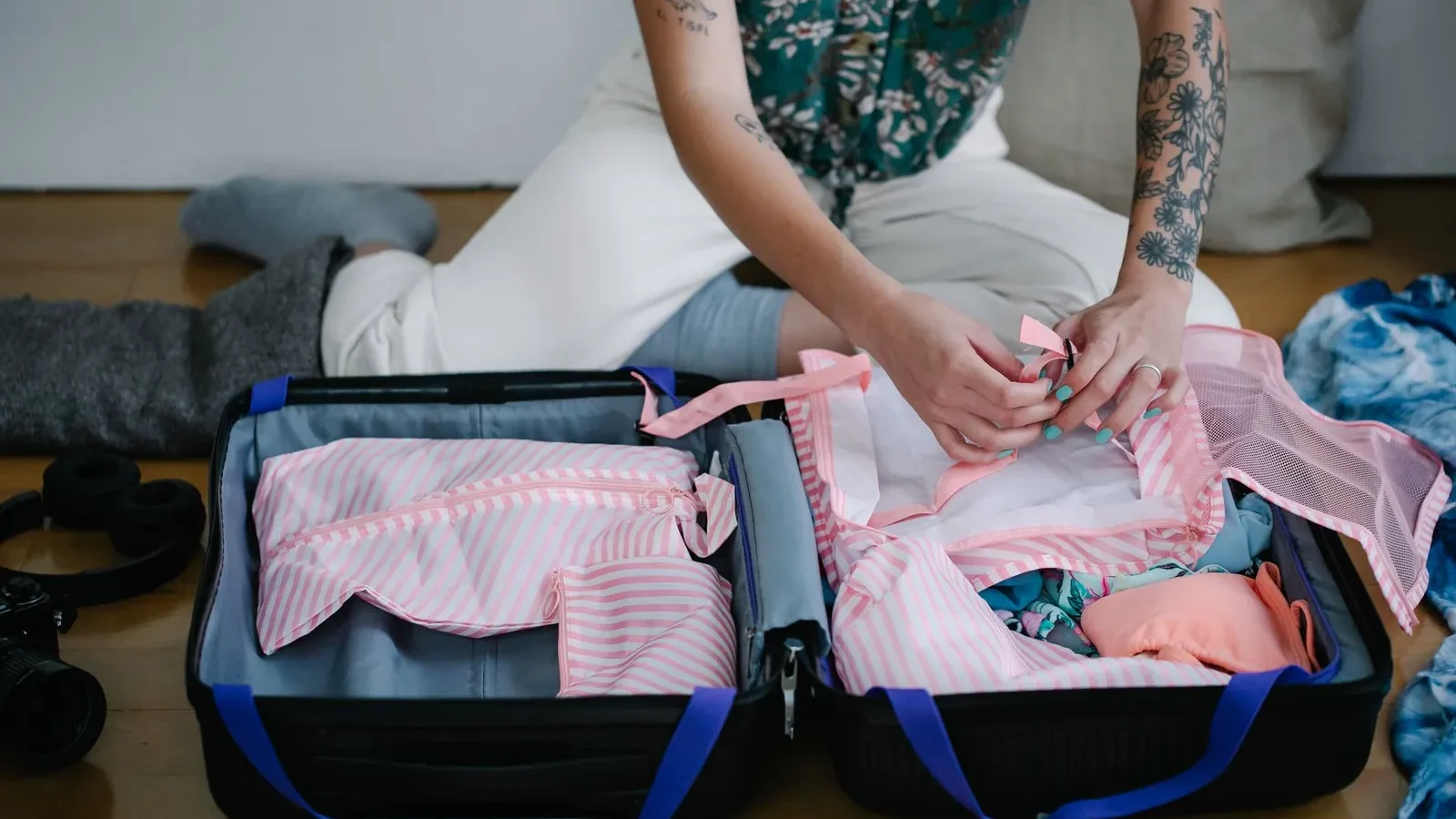
Packing cubes ($15–$40) divide your luggage into zones: one for tops, one for bottoms, one for underwear. You spend less time rummaging and more time outside. Compression bags ($10–$25) squeeze out air and can reduce volume by up to 40%, but they’re slow to unpack and repack mid-trip — not ideal if you’re moving hotels every two days.
Our standard setup: three medium packing cubes for clothes, one small cube for electronics and chargers, one flat pouch for toiletries. Everything has a place.
Pack only clothes you’d actually wear at home in the same weather.
Wear Your Bulkiest Items on Travel Days
Jeans, boots, and a jacket take up disproportionate space in any bag. Wearing them during travel instead of packing them frees 2–3 liters of luggage room and keeps you comfortable on long flights or bus rides. We do this on every trip — it costs nothing and works every time.
Pack Shoes Strategically
Shoes are heavy and eat space fast. For most trips, three pairs covers everything: one for walking or everyday use, one for formal or nicer outings, one for a specific activity like hiking or water sports. Stuff socks or small items inside each shoe to reclaim dead space, and keep shoes in a separate bag or shoe organizer so dirt doesn’t reach your clothes.
For longer trips, one versatile shoe often beats two specialized ones. A quality leather sneaker or slip-on handles casual and semi-formal settings in most cities without taking up a second bag slot.
Minimize Toiletries
Full-size bottles are weight and space thieves. Travel-size versions run $1–$3 each, or use refillable silicone containers. Most hotels provide shampoo and soap, so you realistically need deodorant, a toothbrush, and any prescription items. Solid toiletries — shampoo bars, solid deodorant — weigh less and aren’t subject to the 3-1-1 liquid rule.
We keep a permanent toiletry pouch packed with basics and swap it between trips. It saves about ten minutes of packing time and eliminates the chance of forgetting essentials.
Apply the One-Week Rule
For trips longer than seven days, plan to do laundry once mid-trip. Pack five to six days of clothes, rewear items, and cut your luggage weight roughly in half. Laundromats cost $3–$8 per load in most cities; many accommodations have in-unit machines or a guest laundry room. We wash every seven to ten days, even on two-week trips.
Knowing you’ll launder on day eight also makes you pack more honestly — you’re less likely to throw in clothes you’re unsure about. For a full approach to longer trips, see our guide to packing for two weeks in Europe.
Arrange by Accessibility and Weight
Heavy items go at the bottom of a roller bag, near the wheels. Clothes you’ll need first go on top or in outer pockets. Electronics, chargers, and travel documents go in a small bag you can pull out quickly at security. Underwear and socks sit in the middle — easy to reach, unlikely to shift.
On multi-leg trips, this arrangement matters more than it sounds. When you have 30 minutes between connections, you don’t want to unpack three layers to find your phone charger.
Frequently Asked Questions
How do I pack a suit or dress without wrinkles?
Lay it flat inside a garment bag or roll it loosely around the outside of your packed clothes. Some travelers slip a dry-cleaning plastic bag underneath to reduce friction between layers. Once you arrive, hang it in the bathroom with the shower running hot for five minutes — that steams out most minor creases. Pack it last and unpack it first.
What’s the best way to pack a laptop and electronics?
Use a small tech organizer pouch ($15–$30) with dedicated compartments for cables, adapters, and devices. Keep it in your carry-on — never check electronics. Wrap cables with velcro straps to prevent tangling, and place the laptop at the top of the bag where it won’t be compressed by other items.
Should I pack a daypack inside my luggage?
Yes. A packable daypack — 6 to 10 liters, usually under six ounces — folds into almost nothing and earns its place on daily excursions, grocery runs, and day trips. They run $20–$40 and mean you’re not hauling your main bag everywhere you go. We always pack one.
How do I prevent my luggage from getting damaged?
A luggage wrap or protector ($10–$25) guards against scuffs and makes your bag easier to spot on the carousel. TSA-approved locks reinforce zippers on checked bags. Avoid overstuffing — it stresses seams and breaks zippers faster than anything else. If you’re checking fragile items, center them and surround them with soft clothes.
Is it better to pack light or bring extra clothes for flexibility?
Pack light. Extra clothes add weight and create decision fatigue without adding options you’ll actually use. If every piece you pack mixes with at least two others, you’ll wear everything. One spare outfit for emergencies is reasonable; anything beyond that is usually optimism you’ll pay for at the airport scale.

Tomas is a former airline route planner who now writes about fares, airports and getting there without the drama.