This article may contain affiliate links. If you buy through them we may earn a commission at no extra cost to you.
For two weeks in Europe, one carry-on roller bag plus a personal item handles everything—if you pack seven days of clothes and do laundry once. We’ve tested this on trips ranging from a single country to five countries in fourteen days. What follows is the actual list, with weights, prices, and honest trade-offs.
Clothing Basics: Layers Over Volume
Shoulder season (April–May, September–October) and summer both reward layering over packing a full seasonal wardrobe. We bring 7–8 days of tops and rotate laundry halfway through. Most Airbnbs have washers; a city laundromat runs $5–8 per load and takes about 45 minutes.
What to bring
- 4 lightweight t-shirts or long-sleeve tops—merino wool or synthetic, not cotton, which takes 12–18 hours to air dry
- 2 pairs of pants or jeans (one dark, one neutral)
- 1 pair of shorts (summer only)
- 1 lightweight sweater or fleece—necessary for cool mornings, evening walks, and church dress codes
- 1 waterproof or water-resistant jacket—rain happens in every European city, in every month
- 7 pairs of underwear and socks
- 1 sleep shirt or lightweight pajamas
- Swimsuit (if you’re planning beach time or thermal baths in Budapest, Baden-Baden, or similar)
- One item that works for restaurants and evenings out—a casual dress or dark trousers, not both
Total clothing weight lands around 4–5 pounds. Skip bulky sweaters, a second pair of jeans, and anything packed for a scenario you’ve invented but won’t actually encounter.
Footwear: Two Pairs, Maybe Three
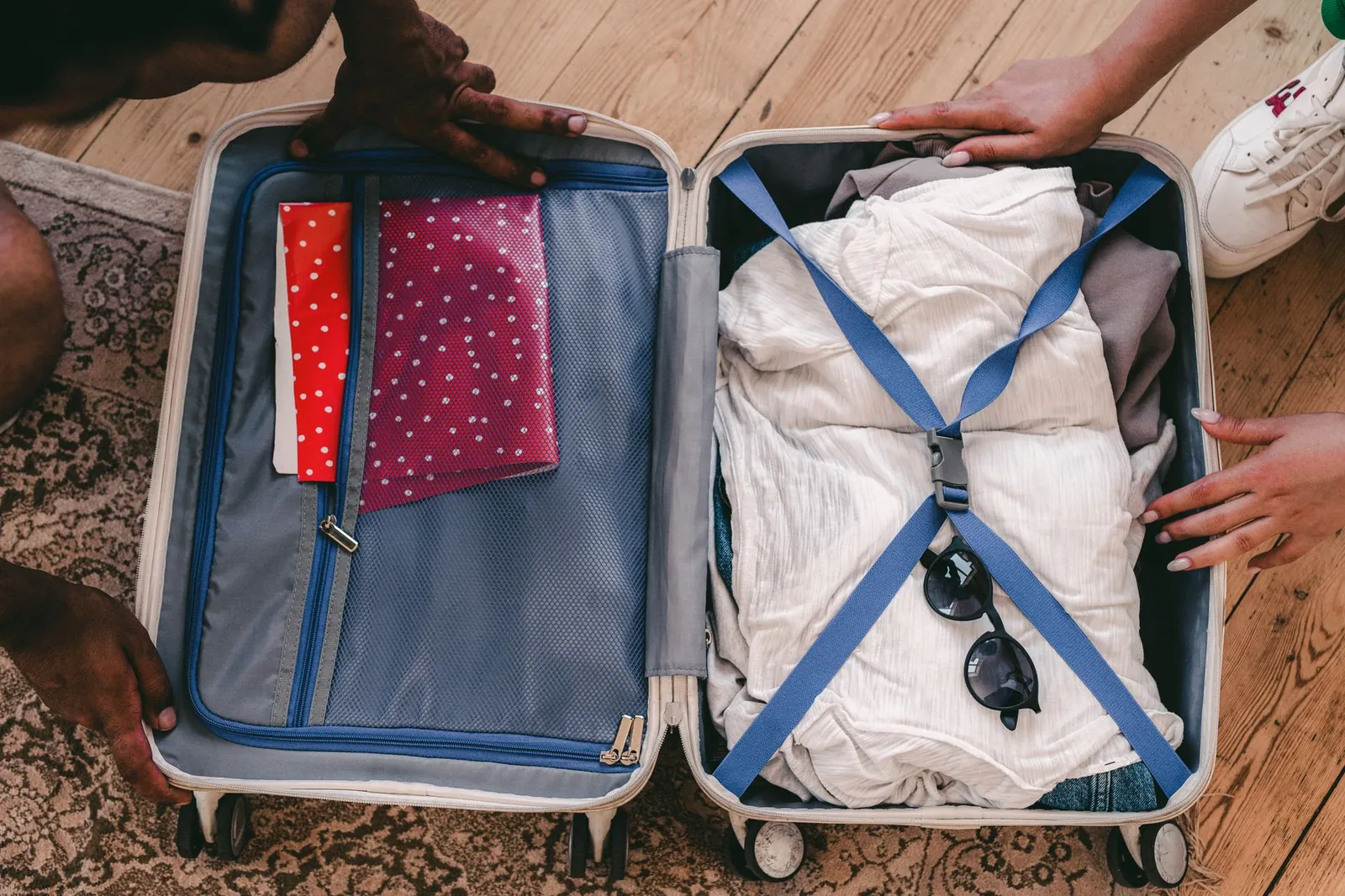
Shoes eat luggage space faster than anything else. We bring two pairs: broken-in walking shoes worn daily, and one dressier option worn maybe three times. A third pair—lightweight flip-flops or Crocs—weighs under half a pound and covers hotel rooms, beach days, and casual evenings.
Recommended shoes
- Walking shoes: Merrell, Salomon, or Allbirds. Budget $90–150. Must be already broken in—blisters on day three of fourteen days are genuinely trip-altering.
- Dressy option: Leather flats, loafers, or slip-on sneakers. Budget $60–120.
- Hotel/casual: Flip-flops or Crocs. Budget $15–30.
Skip hiking boots unless the itinerary includes serious trekking—cobblestones and hiking trails need different shoes, and most city walking doesn’t justify the weight. Skip any shoe you haven’t worn for at least a full day before the trip.
Toiletries and Personal Care
TSA rules apply on the outbound flight: liquids under 3.4 oz in a clear quart-size bag. The simpler move is to buy full-size items once you land. European drugstores stock everything at prices close to US equivalents—Boots in the UK, Müller in Germany, Farmacia in Italy.
Essentials to pack
- Toothbrush and toothpaste (travel-size, 1.5 oz)
- Deodorant (travel-size or solid stick)
- Sunscreen (travel-size; restock locally after day one)
- Prescription medications—full two-week supply, original bottles, plus a copy of the prescription in your email
- OTC medications: antihistamine, ibuprofen, antidiarrheal
- Feminine hygiene products if you have a specific brand preference; availability varies by country and town size
- Hairbrush or comb
- Shampoo and conditioner in travel-size bottles—or skip entirely, since most hotels provide them
- Moisturizer (travel-size, 1.5–3 oz)
- Razor (or buy disposable razors locally for $3–5)
- Nail clippers
- Glasses or contacts, full supply, plus backup glasses
A small pack of tissues or wet wipes earns its ounces. Laundry detergent, shower gel, and full-size shampoo do not.
Tech and Chargers
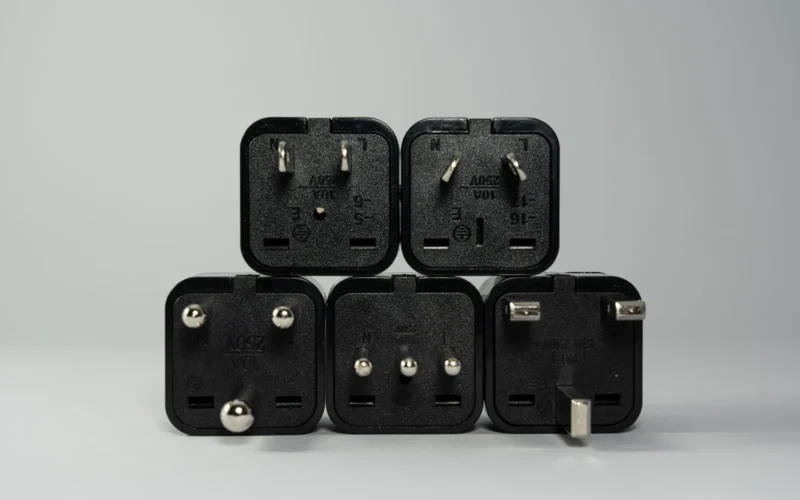
Europe runs on 220V with Type C/F plugs (Type G in the UK). A universal adapter costs $12–25 and handles all of them. One USB-C cable and a USB power adapter covers most setups; total weight under half a pound.
Tech checklist
- Phone and charger
- Universal power adapter
- Portable battery pack—10,000 mAh, $15–30, adds one full phone charge and weighs 6 oz. Worth it on long train days; skippable if you’re comfortable charging at cafés
- Earbuds or headphones
- Camera—phone camera is sufficient for most travelers; bring a dedicated camera only if photography is a primary reason you’re going
- Laptop or tablet—only if you’re working remotely. Otherwise, leave it.
Pack half of what you think you need, then remove half again—you’ll use the rest.
Documents and Money
Keep these in a crossbody bag or neck pouch, separate from checked luggage.
- Passport plus a color photocopy stored separately (email a scan to yourself as backup)
- Travel insurance documents—policy number and provider’s emergency phone number
- Flight and hotel confirmations (digital is fine; one printed backup doesn’t hurt)
- Two credit or debit cards from different banks—if one gets frozen, you’re not stranded
- $50–100 equivalent in euros for arrival; ATMs in every airport and city offer better rates than airport exchange counters
- Driver’s license and International Driving Permit if renting a car (requirements vary by country; confirm with your rental company before departure)
Leave your passport in the hotel safe except when flying or crossing a land border. Small villages and markets in southern Europe still run cash-only; major cities accept cards almost everywhere.
Optional But Worth Considering
These depend on your specific itinerary. When in doubt, skip them—you can buy most things in Europe, often for less than you’d expect.
Weather-dependent
- Lightweight scarf or buff—works as a church shawl, train blanket, and sun cover
- Thermal underlayer (November–March only)
- Hat or cap (sun or warmth, depending on season)
Comfort and convenience
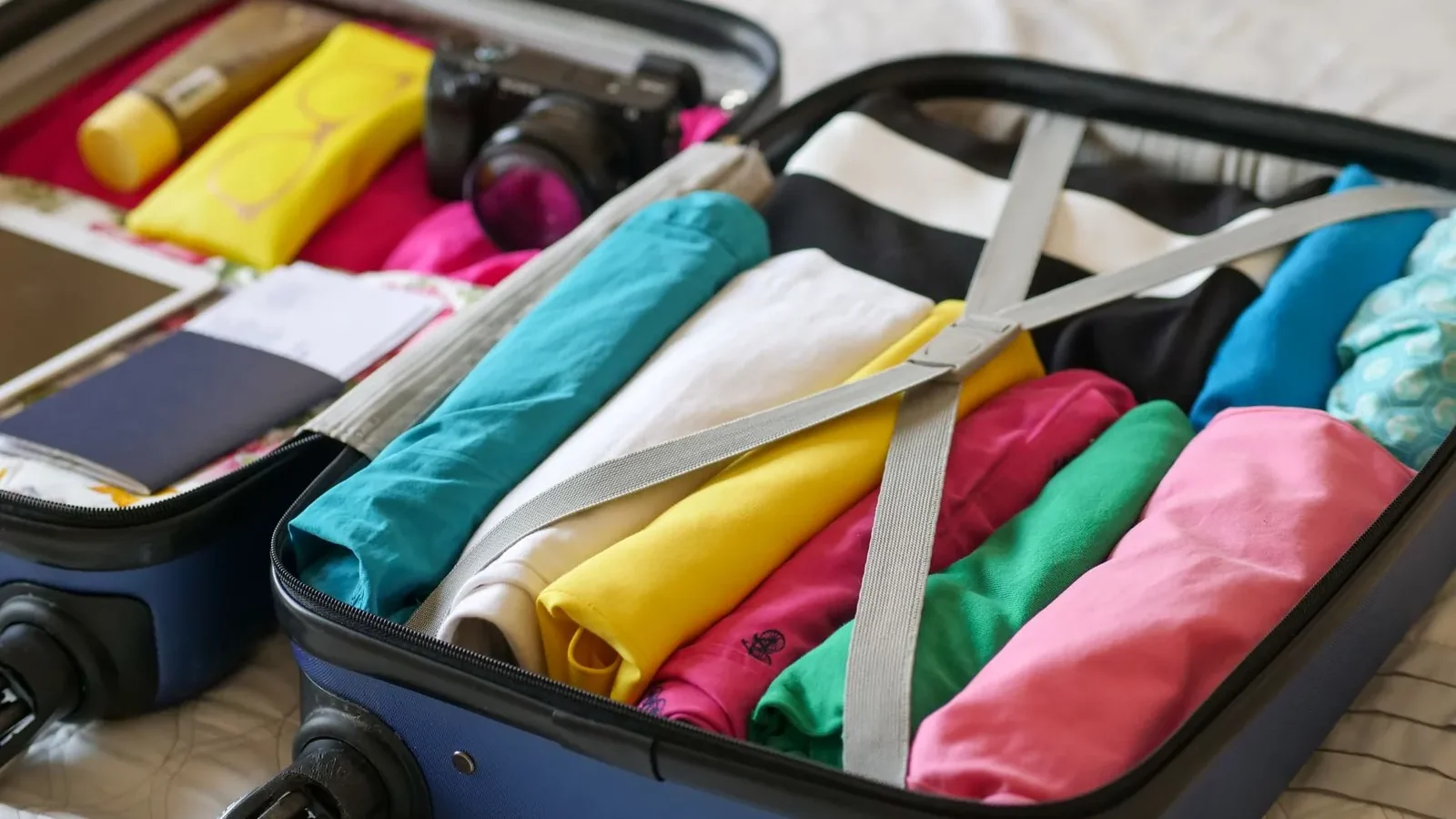
- Compression packing cubes, $15–30—saves roughly 20% of bag volume and keeps clothes findable
- Microfiber quick-dry towel, $10–15—useful for hostels, beaches, or thermal baths; unnecessary if you’re staying in hotels throughout
- Reusable water bottle, $20–40—Rome, Vienna, and Zurich have public drinking fountains; refilling saves $3–5 per day
- Earplugs and sleep mask, $5–10—worth it on overnight trains and in city-center hotels with thin walls
- Small sewing kit, $5—one button repair has saved a pair of pants on more than one trip
What to leave home
Full-size hairdryer (hotels provide them), more than one jacket, a full makeup kit, printed guidebooks, and any “emergency” item you’ve never actually needed on a previous trip. These add weight without adding options.
Packing Strategy and Luggage Size
For two weeks, a carry-on roller (22 × 14 × 9 inches, 4–6 pounds empty) plus a personal item handles everything on this list. If you’re checking a bag, a 24-inch suitcase gives you room to spare. See our guide to luggage under $100 for options that hold up to European cobblestones and overhead bins.
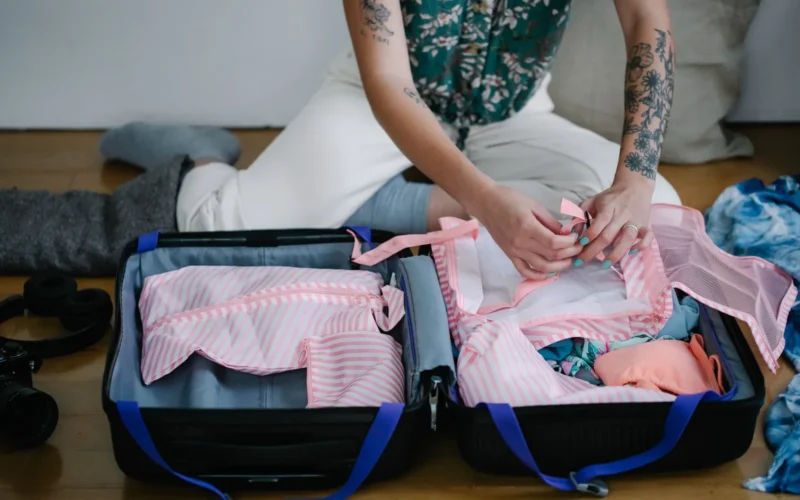
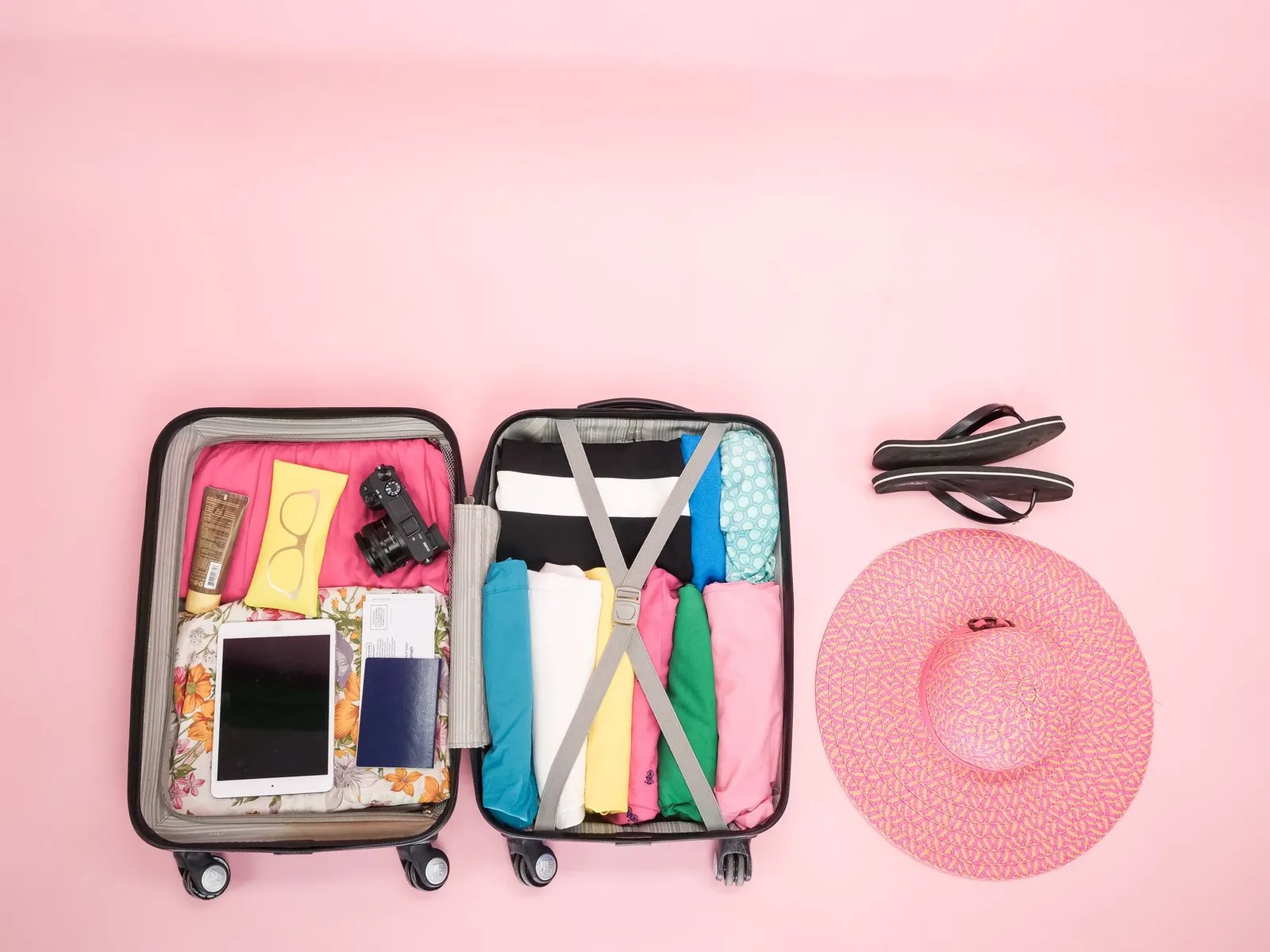
Rolling clothes saves about 20% more space than folding. Wear your bulkiest item—jacket or sweater—on the plane. Pack shoes in the bottom corners, stuff socks inside them, and put heavier items nearest the wheels. Use the packing tips guide for the full roll-versus-fold breakdown.
Leave one-third of the bag empty on departure. Two weeks in Europe almost always means coming home with a scarf, a bottle of wine, a cookbook, or a ceramic something. Account for it before you leave, not at the airport on the way back.
Frequently asked questions
Do I need travel insurance for Europe?
Not legally required for US citizens, but a two-week policy runs $10–30 and covers medical emergencies, trip cancellation, and lost luggage—costs that can run into thousands without it. Before buying a separate policy, check your credit card benefits and existing health insurance; some cards include trip cancellation and some health plans have limited international coverage.
What’s the best luggage weight for two weeks?
Aim for 15–20 pounds total (bag plus contents). That keeps you well under checked limits (typically 50 pounds) and carry-on limits (typically 22 pounds), avoids overweight fees of $75–200 per bag, and makes hauling up four flights of hotel stairs manageable. Weigh the packed bag at home before you leave.
Should I pack a power bank?
Yes, if you’re running maps, translation apps, and a camera on your phone all day. A 10,000 mAh battery ($15–25) adds one full charge and weighs 6 ounces. Skip it if you’re comfortable finding a café or museum to plug in every afternoon—which works fine in cities, less so on long travel days between them.
Can I do laundry during a two-week trip?
Yes, and it’s the single biggest space-saver on the list. Most Airbnbs have washers; ask when booking. City laundromats cost $5–8 per load and take 30–45 minutes. Doing one mid-trip wash lets you pack 35–40% less clothing. Hand-washing socks and underwear in the sink takes ten minutes if you’re between laundry days.
What if I forget something?
Buy it in Europe. Pharmacies, supermarkets, and H&M are in every city, and prices are comparable to the US. The real exceptions: prescription medications (bring a full supply and a copy of the prescription) and any very specific product you rely on. Forgetting a sweater costs €30 and thirty minutes. Forgetting a prescription medication is a different problem entirely.

Tomas is a former airline route planner who now writes about fares, airports and getting there without the drama.