This article may contain affiliate links. If you buy through them we may earn a commission at no extra cost to you.
A reusable bottle cuts $100–200 off a two-week trip (bottled water runs $2–6 per bottle in most destinations) and eliminates the plastic guilt. The harder question is which bottle survives real travel—checked bags, 95°F heat, dusty trails—without adding enough weight to matter. We carried insulated, collapsible, and recycled-plastic options across Southeast Asia, Europe, and South America to find out.
Material trade-offs: stainless steel vs. recycled plastic vs. glass
Stainless steel
We carried 16–24 oz stainless steel bottles through Southeast Asia and Europe. They keep drinks cold for 12+ hours, don’t leach chemicals, and last years. The catch: they weigh 1–1.5 lbs full, and dents accumulate. Budget $35–120 depending on brand and insulation quality.
Recycled plastic (BPA-free)
Bottles made from recycled ocean plastic or post-consumer waste weigh 0.3–0.5 lbs and cost $20–40. They won’t shatter and are light enough to forget you’re carrying them. Trade-off: no insulation, so cold water stays cold for maybe 2–3 hours in heat. Cheaper versions crack after 6 months of heavy travel.
Glass with protective sleeve
Completely inert and the cleanest-tasting option, but impractical for most travel. Even with a neoprene sleeve, glass is fragile and heavy. Skip it unless you’re car-based or staying in one place for weeks.
The bottle you’ll actually use beats the most eco-friendly bottle sitting at home.
Top eco-friendly travel water bottles we tested
| Bottle | Weight | Material | Price | Best for |
|---|---|---|---|---|
| Hydro Flask Standard Mouth 18oz | 1.1 lbs | Recycled stainless steel | $89–110 | Long trips where cold drinks matter |
| S’well Traveler 18oz | 0.95 lbs | Stainless steel (BPA-free cap) | $65–85 | Urban travel, compact packing |
| Klean Kanteen Classic 18oz | 0.9 lbs | Recycled stainless steel | $40–60 | Budget travelers, eco-conscious buyers |
| Nalgene Sustain 32oz | 0.6 lbs | 50% recycled plastic | $25–35 | Ultralight backpacking, day trips |
| Owala FreeSip 24oz | 0.7 lbs | Recycled plastic | $30–40 | One-handed drinking, warm climates |
| Collapsible Nomader 16oz | 0.25 lbs | Food-grade silicone | $15–25 | Minimalist packing, space-saving |
Insulation vs. weight
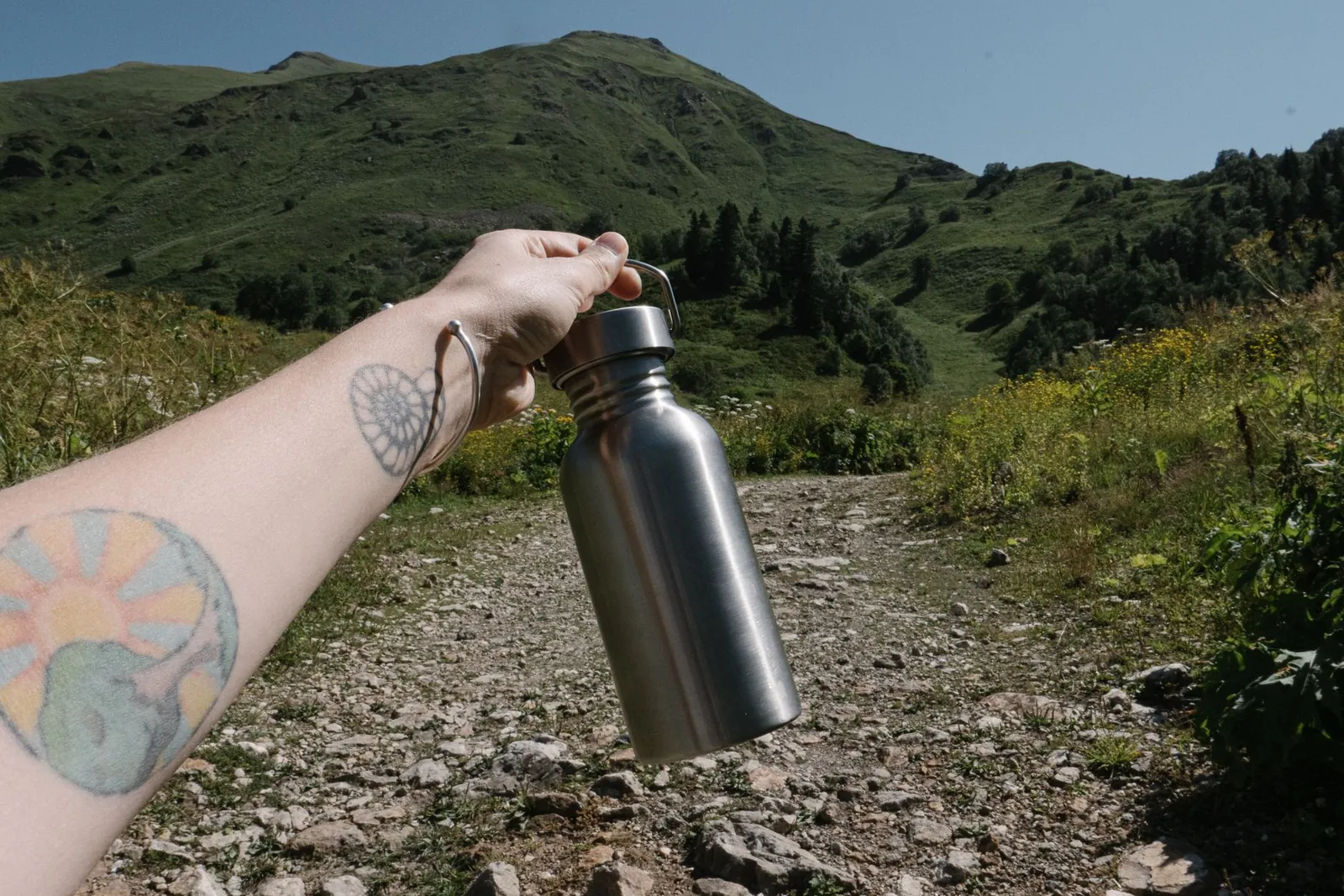
Double-wall insulated bottles add 0.5–0.8 lbs but keep ice for 24 hours. Single-wall bottles weigh half as much and don’t insulate at all. On a two-week backpacking trip through Thailand, we ditched the insulated bottle after day three—the weight wasn’t worth it in 95°F heat where ice melts in the bottle before you finish it anyway. In Patagonia in shoulder season, the same bottle earned its weight every day.
The decision comes down to two variables: how often you’re moving, and whether cold water actually matters to you. Moving every 2–3 days, lightweight wins. Staying in one place for a week, insulation is worth carrying.
Collapsible bottles: backup, not primary
Collapsible silicone bottles pack down to the size of a banana and weigh under 0.3 lbs—useful when you’re already at luggage capacity. The downsides are real: harder to drink from one-handed, they scratch and stain over time, and they keep nothing cold. We used a Nomader as a backup bottle during a 10-day trek in Peru and it held up, but we wouldn’t rely on one as a primary bottle for a long trip.
Price range: $15–30. Losing one doesn’t sting, which matters on long routes where gear disappears.
Sustainability beyond the bottle itself
Refill infrastructure
In Europe and North America, tap water is safe almost everywhere. In Southeast Asia, South America, and most of Africa, we relied on filtered water stations at hostels, hotels, and some cafes. The Refill and TapMap apps locate sources before you’re thirsty. Some regions simply require bottled water—no bottle solves that.
Manufacturing footprint
A stainless steel bottle takes roughly 200 uses to offset its manufacturing and shipping carbon cost. Travel 4–6 weeks per year and use the bottle at home, and you hit that breakeven in 1–2 years. Recycled plastic has a lower initial footprint but shorter lifespan, so the math depends entirely on how long you keep it before it cracks.
End of life
Stainless steel is 100% recyclable. Plastic bottles—even eco-labeled ones—may or may not be accepted by your local recycling program depending on resin type and local infrastructure. Check the number on the bottom before you buy.
Sizing and packing
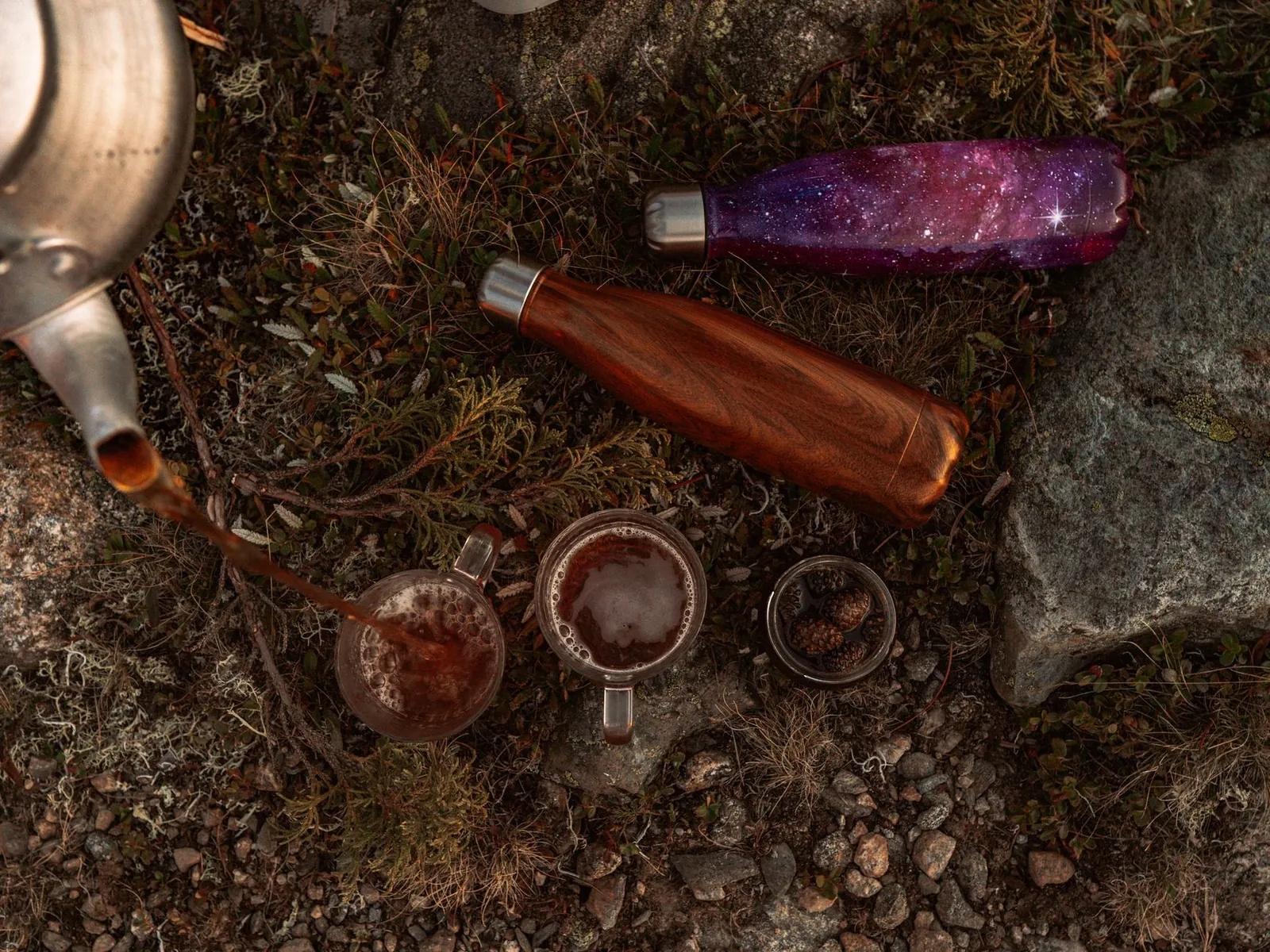
A 16–18 oz bottle fits most backpack side pockets and daypack cup holders without adjustment. Bottles 24 oz and larger go in the main compartment or strap to the outside, which snags on overhead bins and narrow doorways. For a two-week trip, 18 oz is the practical sweet spot—small enough to pack cleanly, large enough that you’re not refilling every 45 minutes.
Traveling with a partner, one shared 32 oz bottle is lighter than two 18 oz bottles but less convenient when you’re splitting up for the day. Most of us find the individual bottle worth the extra weight. See our packing list for two weeks in Europe for how bottles fit alongside other gear.
Our verdict
For most travelers, a stainless steel bottle in the $40–90 range—Klean Kanteen if budget matters, S’well if size and finish do—balances durability, weight, and long-term eco-impact. Ultralight backpackers should go recycled plastic (Nalgene Sustain). Minimalists moving locations constantly will find a collapsible silicone bottle useful as a second bottle, not a replacement. Avoid anything under $20 unless you’re comfortable replacing it annually; cheap bottles leak, crack, and end up in landfill faster than they offset a single week of plastic bottles.
Frequently asked questions
Can I take a full water bottle through airport security?
No. TSA and most international checkpoints require empty bottles at the X-ray. Fill it after you clear security—most major airports have water fountains or refill stations post-security, though quality and availability vary. Collapsible bottles pack completely flat until you need them, which makes the empty-bottle rule less annoying.
Which eco-friendly bottle is best for hot climates?
Insulated stainless steel keeps ice longest—Hydro Flask and S’well both perform well here—but if ambient temperatures are above 90°F, ice melts within a few hours regardless. In extreme heat, a lightweight recycled plastic bottle you refill frequently is often more practical than a heavy insulated one you refill less. Keep it in your daypack rather than strapped to the outside where direct sun hits it.
Do eco-friendly bottles leak in backpacks?
Quality bottles rarely leak if the cap is closed properly. Collapsible silicone bottles and cheap plastic caps are the most common culprits. Test before any trip: fill it, seal it, invert it in your bag for an hour. Better to find a leak at home than mid-flight with electronics in the same compartment.
How often should I replace an eco-friendly water bottle?
Stainless steel bottles last 5–10 years with normal use. Recycled plastic typically shows cracks or cloudiness after 2–4 years. Collapsible silicone bottles last 1–2 years before the material degrades or the seal loosens. Travel heavily—8+ weeks per year—and plastic bottles need replacing more often, which reduces the eco-benefit. Stainless steel is the better long-term investment on both counts.
Are expensive eco-friendly bottles worth the premium?
Hydro Flask and S’well cost $20–40 more than Klean Kanteen for comparable insulation performance. The premium covers brand and finish, not meaningfully better durability. If budget is tight, buy the Klean Kanteen. A $40 bottle used for five years is a better outcome—financially and environmentally—than a $100 bottle used for two.

Maya has spent twelve years writing about travel, from budget backpacking to family resorts, and still packs too many socks.