This article may contain affiliate links. If you buy through them we may earn a commission at no extra cost to you.
Southwest gives you two free checked bags. JetBlue and Alaska give you one. American, Delta, and United charge $35 for the first checked bag and $50 for the second on domestic flights. A passenger flying four round trips a year on American pays $280 in checked bag fees; the same traveler on Southwest pays nothing.
Who Charges for Checked Bags and How Much
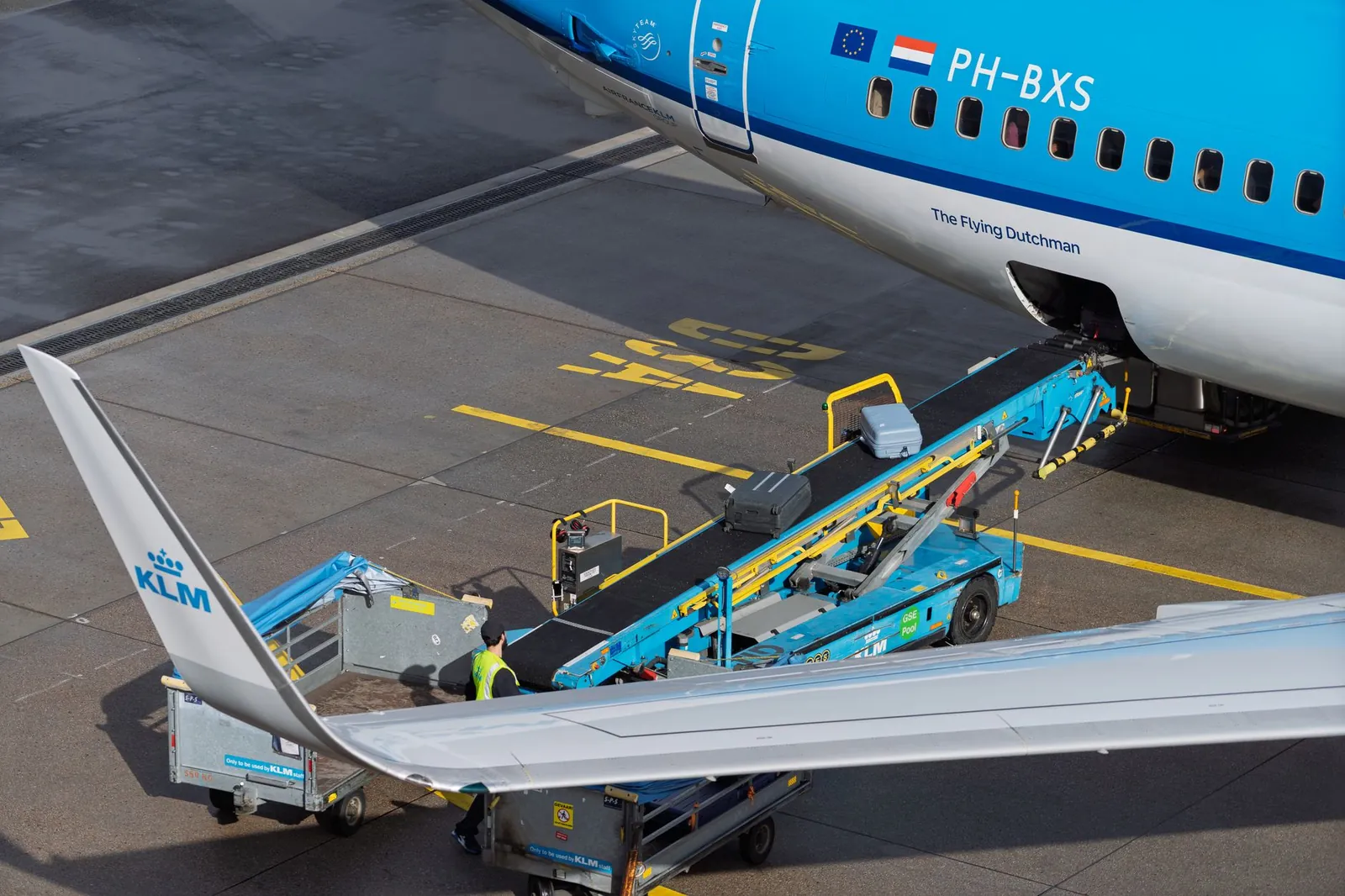
The $35 first-bag fee is standard across American, Delta, and United for domestic economy fares. The second bag runs $50. Both apply to standard luggage: up to 62 linear inches and 50 pounds.
Exceptions to the $35 first-bag rule
- Southwest Airlines — two free checked bags for every passenger, every fare. This policy has held since 1973.
- JetBlue — one free checked bag for all passengers; second bag is $35.
- Alaska Airlines — one free checked bag; second is $35.
- Frontier and Spirit — $30–$40 for the first checked bag, depending on how far in advance you purchase and whether you hold a membership. Buy at the airport and that climbs to $40–$50.
If you fly more than twice a year, the checked baggage policy should factor into which carrier you book. The math is straightforward: four round trips on American with one checked bag each way costs $280. On Southwest, zero.
Carry-On Bags: Usually Free, With One Real Catch
Every major US airline allows one free carry-on (rolling bag) and one personal item. Size rules are nearly identical across carriers: 22 × 14 × 9 inches. The constraint isn’t the policy—it’s overhead bin space.
On regional aircraft with 50–76 seats, bins fill fast. We’ve had carry-ons gate-checked on Southwest and United flights that were within size limits, typically on full morning and evening departures. There’s no fee for gate-checking, but you lose the convenience of deplaning with your bag.
For size rules by airline, see our guide to carry-on luggage size rules by airline.
Oversized and Overweight Bag Fees
Luggage exceeding 62 linear inches or 50 pounds triggers an oversize fee. Most airlines set that fee at $100 per bag on domestic routes. Budget carriers charge slightly less but apply stricter limits.
| Airline | Oversize Fee (Domestic) | Weight Limit | Size Limit (L+W+H) |
|---|---|---|---|
| American | $100 | 50 lbs | 62 inches |
| Delta | $100 | 50 lbs | 62 inches |
| United | $100 | 50 lbs | 62 inches |
| Southwest | $100 | 50 lbs | 62 inches |
| JetBlue | $100 | 50 lbs | 62 inches |
| Alaska | $100 | 50 lbs | 62 inches |
| Frontier | $75–$100 | 40 lbs | 62 inches |
| Spirit | $80–$100 | 40 lbs | 62 inches |
Frontier and Spirit cap weight at 40 pounds, not 50. A bag that clears United’s scale may trigger a fee on Spirit. If you regularly travel with golf clubs, a large instrument case, or ski equipment, budget carriers are rarely the cheaper option once oversize fees apply.
Baggage Fees for Elite Members and Credit Card Holders
Elite status waives checked bag fees, but earning it requires consistent flying. First-tier thresholds on each major carrier:
- American Airlines (Silver) — 10 flight segments or $1,000 spent in a calendar year. Waives the first checked bag.
- Delta (Silver Medallion) — 10 segments or $1,000 spent. Waives the first checked bag.
- United (Silver) — 10 segments or $1,000 spent. Waives the first checked bag.
- Southwest (A-List) — 25 segments or $1,500 spent. Waives checked bag fees, though you already get two free.
- JetBlue (Blue Plus card) — $99/year. Includes free checked bags and priority boarding without any flight minimums.
- Alaska (MVP) — 20 segments or $1,000 spent. Waives the first checked bag.
JetBlue’s model is the outlier: you buy the benefit directly rather than earn it through flying. For someone who takes four or fewer flights a year, the $99 card covers $140 in first-bag fees on those trips and breaks even on the third round trip.
Airline credit cards
Most airline co-branded cards (annual fees: $95–$550) waive the first checked bag for the cardholder and sometimes one companion. A $95 card that waives first-bag fees covers its cost after two round trips ($70 in fees avoided) and typically adds priority boarding. This math only works if you fly the same airline consistently—mixing carriers means paying the fee regardless of which card you carry.
If you fly round-trip more than twice a year on the same airline, an elite status tier or airline credit card pays for itself in checked bag fees alone.
International Baggage Allowances
International routes often include a free checked bag even on airlines that charge domestically, but this depends on route and fare class—not just airline.
- Transatlantic (US to Europe) — Most legacy carriers include one free 50-lb bag in economy. Some European budget carriers charge $60–$100.
- Transpacific (US to Asia) — Generally one free bag included; a second runs $100–$150.
- Caribbean and Central America — No consistent rule. Check your specific airline and route before booking.
The fine print matters here more than anywhere else. We booked a United flight to London and found the free checked bag applied only to fares purchased directly through United—third-party booking sites didn’t surface that detail at checkout.
How to Avoid or Minimize Baggage Fees
Pack carry-on only
The most reliable approach. A standard carry-on and personal item cover trips up to a week with disciplined packing. This is especially effective on Frontier and Spirit, where checked bag fees are built into the business model.
Choose the airline that matches how you pack
We compared a round-trip New York to Denver: Southwest was $18 more than United. With one checked bag each way, United cost $70 more in fees. Southwest came out $52 ahead. The fare comparison alone told the wrong story.
Buy bags at booking on budget carriers
Frontier and Spirit charge $30–$35 for a checked bag added at booking versus $40–$50 at the airport. On a Frontier test booking, we saved $10 per bag by adding it during checkout—$20 round-trip.
Use loyalty programs strategically
Ten flight segments per year on American, Delta, or United earns first-tier status and waives the first checked bag. For a business traveler flying weekly, this threshold falls in January. For someone flying monthly, it’s achievable by October.
Baggage Fees Comparison Table
| Airline | First Checked Bag | Second Checked Bag | Free Carry-On | Best For |
|---|---|---|---|---|
| Southwest | Free | Free | Yes | Frequent checked-bag travelers |
| JetBlue | Free | $35 | Yes | One-bag travelers; Blue Plus card holders |
| Alaska | Free | $35 | Yes | West Coast routes; occasional checked bags |
| American | $35 | $50 | Yes | Frequent flyers with elite status |
| Delta | $35 | $50 | Yes | Frequent flyers with elite status |
| United | $35 | $50 | Yes | Frequent flyers with elite status |
| Frontier | $30–$40 | $40–$50 | Yes (limited bin space) | Carry-on only travelers |
| Spirit | $30–$40 | $40–$50 | Limited | Carry-on only; budget-first travelers |
Our verdict
If you check bags on most trips, Southwest’s free allowance wins even when its fares run higher—the savings absorb a $20–$30 fare gap on most domestic routes. JetBlue and Alaska are the right call if you check one bag occasionally and want flexibility. American, Delta, and United only make sense for bag-checkers who hold elite status or carry an airline credit card. Frontier and Spirit are genuinely cheaper only if you travel carry-on only, every time—one checked bag erases their fare advantage.
Frequently asked questions
Can I dispute a baggage fee if my bag was slightly overweight?
Not usually. Airlines weigh bags at check-in and apply the fee on the spot. You can ask an agent to reweigh or shift items to a personal item before the fee is charged, but disputing after the fact requires contacting customer service post-flight. Results vary based on how much the bag exceeded the limit and the agent’s discretion—we’ve seen both refunds and firm denials for bags that were two to three pounds over.
Do baggage fees apply to connections?
A bag checked through to your final destination on a single itinerary is charged once, not at each connection. The trap is separate tickets: if you book two flights independently through different airlines or booking sites, each carrier charges its own fee. This comes up often with budget carrier add-ons to international itineraries.
Are sports equipment and musical instruments charged as oversized bags?
Usually yes. Golf clubs, surfboards, and large instrument cases typically trigger oversize fees of $100–$200. Some airlines waive one sports item for elite members. Check your specific airline’s equipment policy before you travel—the rules differ enough that a call to the airline is worth the time.
Do I pay baggage fees if I book through a travel site like Expedia?
The airline charges the fee, not the booking site. The problem is that third-party sites don’t always display baggage policies clearly at checkout, and elite status baggage waivers may not apply to off-airline bookings. Check the airline’s website directly for the baggage policy tied to your specific fare class before booking elsewhere.
Can I buy baggage allowance after I book my flight?
Yes, on most airlines. You can add checked bags during online check-in (typically 24 hours before departure) or at the airport. On Frontier and Spirit, buying at booking saves $10–$15 per bag versus paying at the airport. On American, Delta, and United, the price is the same either way.

Maya has spent twelve years writing about travel, from budget backpacking to family resorts, and still packs too many socks.