This article may contain affiliate links. If you buy through them we may earn a commission at no extra cost to you.
At a major hub like ATL or LAX during morning rush, budget 30–45 minutes for standard screening. At a regional airport mid-week, you might clear in under 10. The gap between those two scenarios is what this guide is for—so you can set your arrival time based on your actual airport, not a generic rule.
How Security Wait Times Vary by Airport Size
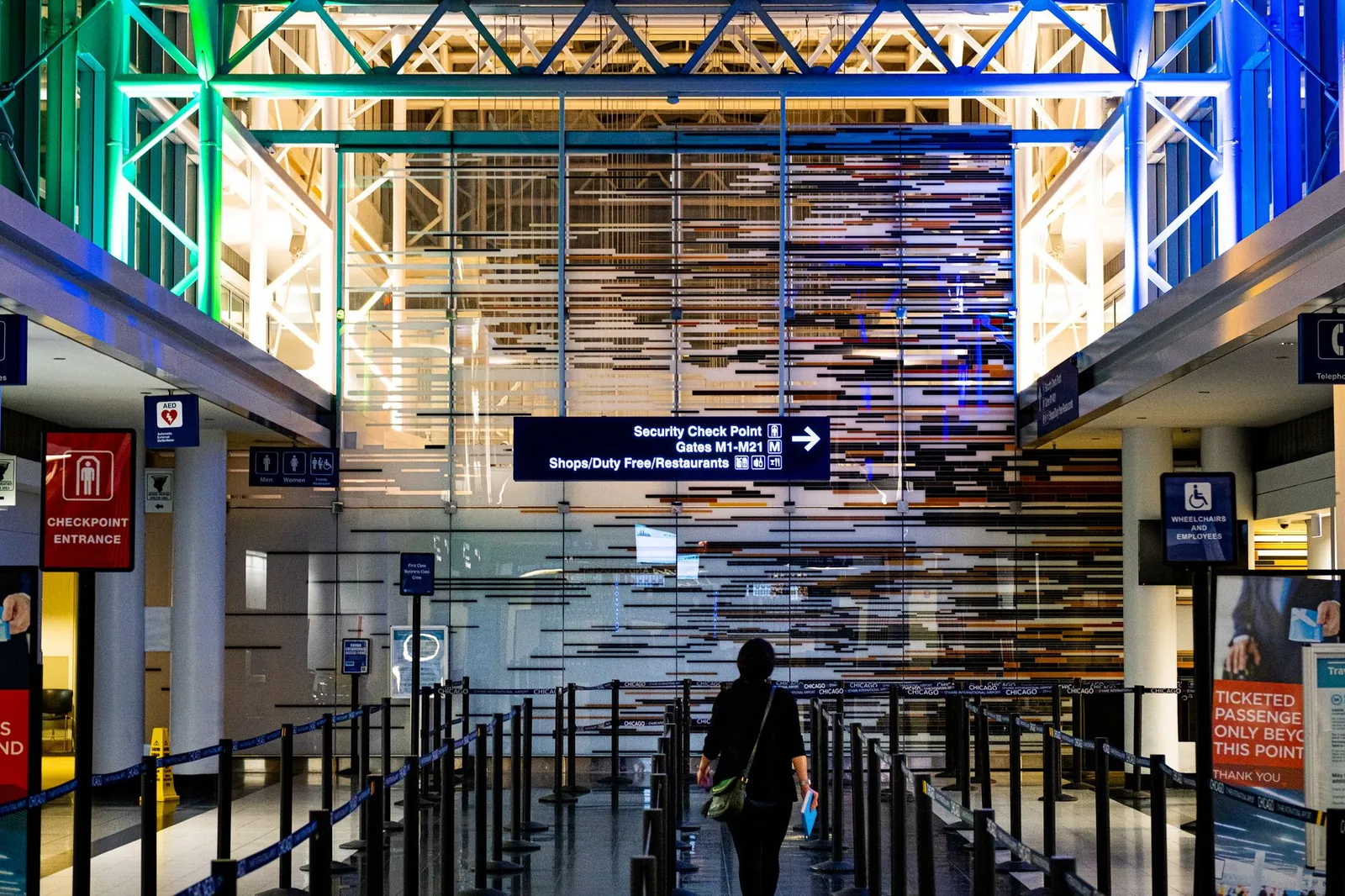
Volume drives wait time more than any other single factor. The counterintuitive part: megahubs have more open checkpoints, but they also have proportionally more passengers. A smaller airport with two lanes and 200 travelers at 7 AM will move faster than O’Hare with 20 lanes and 4,000.
Major hub airports (ATL, DFW, ORD, LAX)
These airports handle 75–110 million passengers annually. During morning rush (5–9 AM) and evening rush (4–7 PM), expect 20–45 minutes for standard screening. We’ve waited 50 minutes at ATL on a Friday morning in summer. Off-peak—mid-afternoon, late night, or before 5 AM—drops to 10–15 minutes at the same checkpoints.
Medium hubs (BOS, SFO, MIA, DEN)
At 30–62 million passengers per year, these airports tend to run 15–30 minutes at peak and 5–10 minutes off-peak. Checkpoint capacity here is better matched to volume than at the megahubs, so the swings are less dramatic.
Smaller regional airports (under 10 million passengers)
Five to ten minutes most days, even during rush hours. The trade-off is fewer nonstop routes and often higher fares to get there in the first place.
Time of Day and Day of Week
The pattern holds across airports: Monday–Friday 6–9 AM and 4–6 PM are the slowest windows. Sunday 4–9 PM is heavy as leisure travelers return. Tuesday and Wednesday mid-morning are consistently the fastest times to fly if your schedule allows it.
Peak windows
- Monday–Friday 6–9 AM: business travelers, connecting passengers, families
- Friday 4–6 PM: weekend departure surge
- Sunday 4–9 PM: return-home rush
- Holiday weeks (Thanksgiving, Dec 20–Jan 2): add 50% to every estimate below
Off-peak windows
- Weekday 10 AM–2 PM: typically 5–10 minutes at most airports
- Tuesday–Wednesday any time: generally the lightest days of the week
- Before 5 AM: fast, but requires an early wake-up that costs you in other ways
The single biggest time-saver is arriving during off-peak hours, not spending money on PreCheck alone.
TSA PreCheck vs. Standard Screening
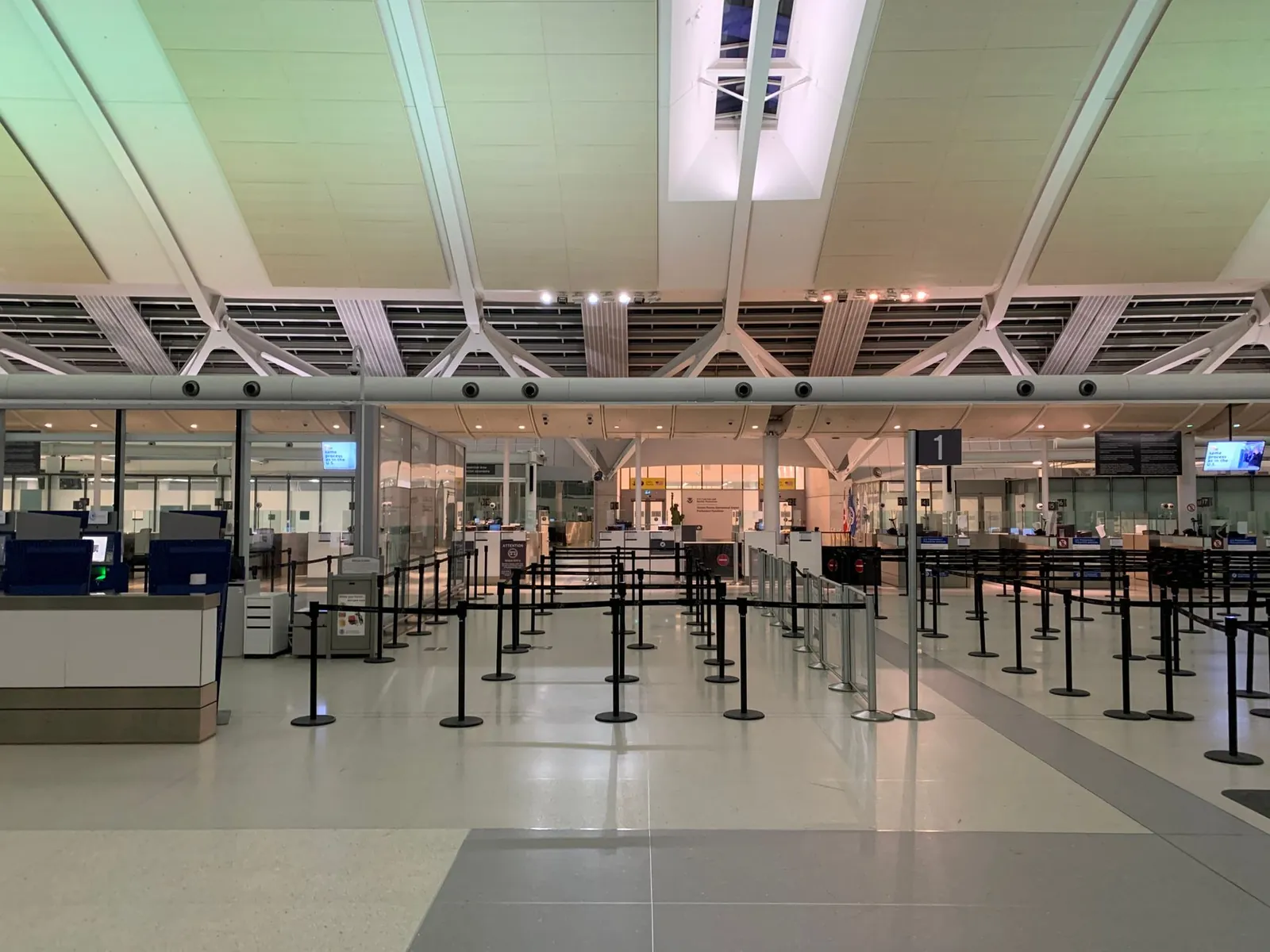
PreCheck costs $78–$85 for five years—roughly $16 per year. Whether that’s worth it depends entirely on how often you fly and from where.
What PreCheck actually saves
You keep shoes, belt, and light jacket on; laptops and liquids stay in your bag; you use a dedicated lane. In practice, PreCheck lanes at major hubs run 5–10 minutes during peak hours versus 20–45 minutes in the standard lane. Off-peak, the gap narrows to 2–3 minutes versus 8–12 minutes—meaningful, but not dramatic.
At smaller airports where the standard line is already 5–10 minutes, PreCheck saves 2–3 minutes at most. If you fly fewer than four times per year or primarily use regional airports, the math doesn’t work in your favor.
Global Entry ($100 for five years) includes PreCheck
Global Entry adds expedited customs and immigration on international arrivals. If you travel internationally even once a year, it’s more valuable than PreCheck alone—same price bracket, broader benefit.
Who should skip PreCheck
Infrequent flyers (fewer than four trips per year), anyone whose home airport is regional, and travelers who’ve already booked a tight connection. PreCheck won’t recover 20 minutes you’ve already lost.
Real Wait Time Data for Major Airports
| Airport | Peak Hour Wait (Standard) | Off-Peak Wait (Standard) | PreCheck Peak | Annual Passengers |
|---|---|---|---|---|
| Atlanta (ATL) | 30–45 min | 8–12 min | 5–8 min | 110M |
| Dallas–Fort Worth (DFW) | 25–40 min | 7–10 min | 4–6 min | 75M |
| Chicago (ORD) | 20–35 min | 6–10 min | 4–7 min | 84M |
| Los Angeles (LAX) | 25–40 min | 8–12 min | 5–8 min | 88M |
| Denver (DEN) | 15–25 min | 5–8 min | 3–5 min | 69M |
| Boston (BOS) | 15–25 min | 5–8 min | 3–5 min | 50M |
| San Francisco (SFO) | 20–30 min | 6–10 min | 4–6 min | 62M |
| Regional airport (under 10M) | 8–12 min | 3–5 min | 2–3 min | 1–10M |
Our verdict
If you fly four or more times per year from a major hub, TSA PreCheck pays for itself in time and stress. At smaller airports, standard screening is already fast enough that PreCheck adds minimal value. For international travel, Global Entry is the better investment at the same price point.
How to Move Faster Through Security
Before you leave home
- Check the TSA wait-time tracker at tsa.gov 1–2 hours before departure. It updates every 30 minutes at major airports and is genuinely useful.
- Wear slip-on shoes and minimal metal. A belt and dress shoes alone can add 3–4 minutes at a busy checkpoint.
- Pack liquids in a single quart-size bag at the top of your carry-on so you’re not unpacking at the bin.
- Have your ID and boarding pass out before you reach the document checker—not while you’re standing in front of them.
At the airport
- Look for the shortest PreCheck lane, not the shortest standard lane. PreCheck lines move faster even when they appear longer.
- If the main checkpoint shows a 30-minute wait, ask an agent about alternate checkpoints. Some airports—DFW and ORD in particular—have satellite security entrances near specific concourses that most travelers walk past.
- Mobile boarding passes scan faster than printed ones at most airports. The exception is older scanners at some regional terminals, which occasionally struggle with phone screens in bright light.
How Early to Arrive
Security time is only part of the calculation. For parking, check-in, and gate procedures, see our guide on how early to arrive at the airport for international flights. For domestic travel, add your expected security wait to a 30-minute base (check-in, walking to gate, boarding buffer).
- Domestic, major hub, peak hour: arrive 2–2.5 hours early (45 min security + 30 min buffer)
- Domestic, major hub, off-peak: arrive 1.5 hours early (10 min security + 30 min buffer)
- Domestic, regional airport: arrive 1.5 hours early (10 min security + 30 min buffer)
- International, any airport: arrive 3 hours early—security, customs forms, and check-in lines all run longer
Known Problem Spots
Some checkpoints run slower than their airport’s average for structural reasons worth knowing before you book:
- LAX Terminal 2 (United domestic): Consistently slower than other LAX terminals. United’s Terminal 7 typically moves faster—worth checking which terminal your flight uses when you book.
- ATL Concourses A–C: More crowded than Concourses D–E. If your gate is in A–C, add 10 minutes to your estimate.
- Holiday weeks (Dec 20–Jan 2, Thanksgiving week): Arrive 3 hours early for domestic flights at any major hub. The 50% wait-time increase is consistent year over year.
- Staffing fluctuations: TSA staffing can drop without notice. Checking local news or the TSA tracker the morning of your flight catches most of these situations before they catch you.
Frequently asked questions
Can I check real-time security wait times online?
Yes. The TSA website (tsa.gov) shows live wait times for major US airports, updated every 30 minutes. Some airports publish wait times on their own apps as well. Google Maps shows security estimates at select airports, but those figures are less consistently reliable than the TSA’s own data.
Do I need TSA PreCheck if I have a connecting flight?
PreCheck helps at your originating airport. On domestic connections, you don’t clear security again. On international connections, it depends on whether you’re re-entering the US or connecting within another country—PreCheck doesn’t apply abroad. It’s worth having if you make four or more connections per year, but it won’t help if your layover is already two-plus hours.
What happens if I arrive late and the security line is long?
Tell an agent immediately—don’t wait in line hoping it moves. TSA has a process for passengers at risk of missing a flight and may move you forward or redirect you to a faster checkpoint. This isn’t guaranteed, and it works better when you ask early rather than with five minutes to spare. Missing your flight because of a security line is not the airline’s fault, so you won’t be rebooked for free.
Why is security slower on some days for no obvious reason?
Three things cause most unexplained slowdowns: TSA staffing gaps, equipment issues at a checkpoint, and unscheduled events like medical emergencies or security incidents that require a lane to shut temporarily. None of these are predictable, which is why checking the TSA wait tracker 1–2 hours before you leave is the most useful thing you can do.
Is it worth paying for Clear?
Clear ($189–$299 per year) replaces the ID-check line with biometric scanning. Combined with PreCheck, it can reduce your total security time to 2–3 minutes at peak hours. That’s genuinely useful if you fly eight or more times per year from major hubs and the time savings matters to you. For most travelers, PreCheck alone is sufficient—and costs $100–$200 less annually.

Tomas is a former airline route planner who now writes about fares, airports and getting there without the drama.