This article may contain affiliate links. If you buy through them we may earn a commission at no extra cost to you.
For most first-time visitors staying three to five nights, the 11th arrondissement (Oberkampf/Bastille) or the 6th (Saint-Germain) give the best return on accommodation spend. The 1st and 4th are closer to the major museums but cost $30–60 more per night and feel like tourist infrastructure rather than a city. We’ve stayed in six arrondissements across multiple trips. Here’s what the price difference actually buys you.
The metro costs $2.35 per ride or $18.50 for a 10-pack. Staying in a better-located apartment often saves $15–20 in daily fares and cuts dead transit time. But “better-located” doesn’t always mean central—it means on a fast line, close to what you plan to do.
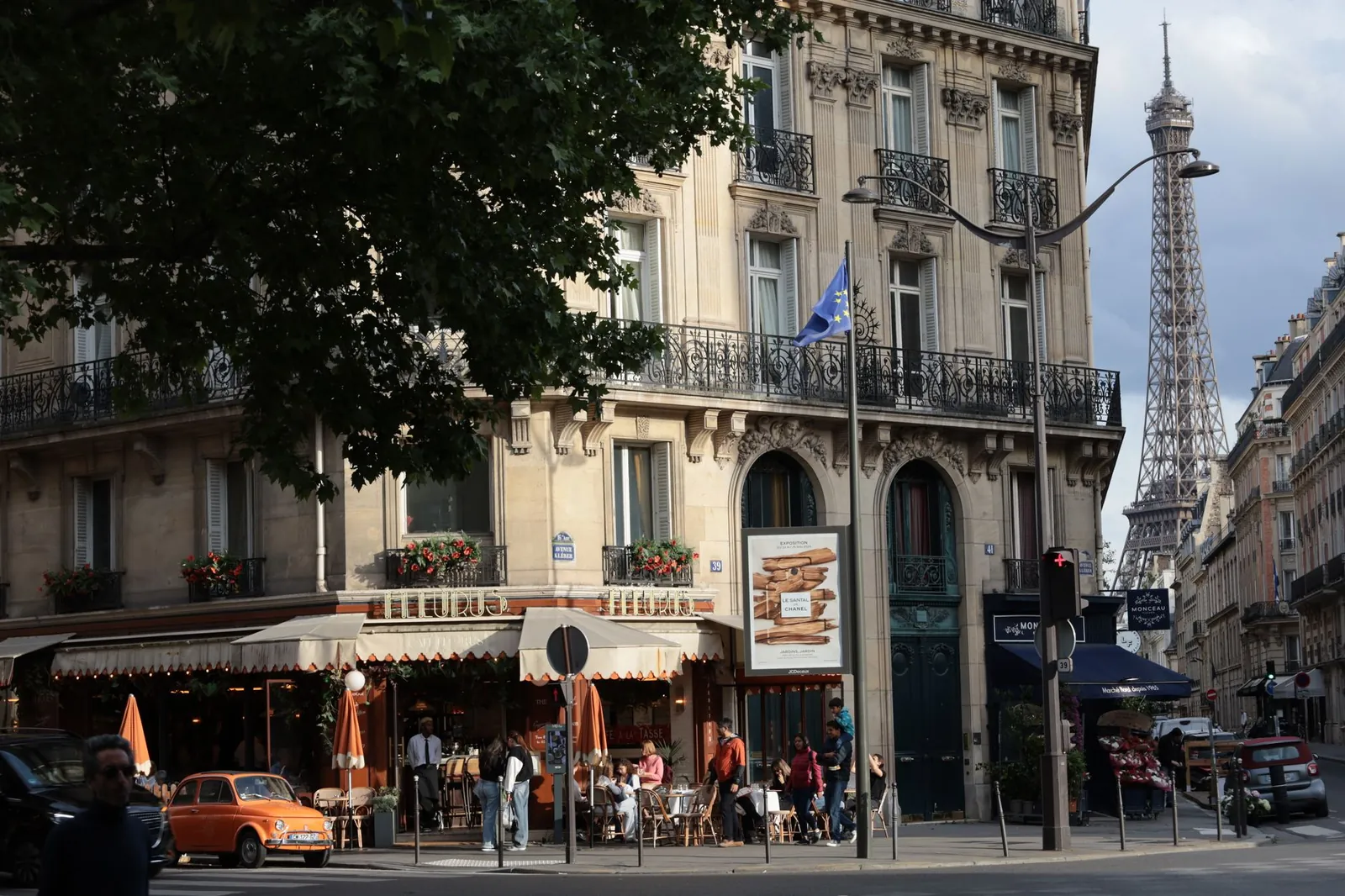
1st Arrondissement: Louvre and Tuileries
The 1st is the geographic center. The Louvre, Tuileries Gardens, and Île de la Cité are within a 10-minute walk of most hotels. If you want to reach the Mona Lisa at 8:45 a.m. and be back before the crowds build, this is the only neighborhood where that’s realistic.
The reality
Hotels run $195–380 per night for three-star options; Airbnb studios start at $130–155 but are often small and poorly lit. A dinner that costs $17–24 in the 11th runs $30–38 here. The streets are stunning until about 7 p.m., then feel emptied out—restaurants switch to tourist menus and the neighborhood loses any sense of local life.
Who it’s for
First-time visitors with flexible budgets, anyone staying only two to three days, families with young children who need to minimize walking distances. Not for budget travelers, anyone wanting to eat where Parisians eat, or people planning to cook.
4th Arrondissement: Le Marais and Île Saint-Louis
The Marais has medieval streets, the Place des Vosges, Jewish delis on Rue des Rosiers, vintage shops, and some of the city’s best gay nightlife. Île Saint-Louis has boulangeries and Berthillon ice cream. Both photograph well and deliver on the promise.
The trade-off
Rue des Rosiers runs shoulder-to-shoulder from 10 a.m. to 10 p.m. on weekends. Hotels cost $175–305 per night; Airbnb one-bedrooms run $120–175. Coffee runs $5–8. We’d stay here specifically for a long weekend with friends or for the nightlife—not as a general base for sightseeing, where the crowds become friction rather than atmosphere.
Who it’s for
Solo travelers seeking social venues, LGBTQ+ travelers, anyone on a short trip who wants to be in the action. Not for families with small children, light sleepers, or anyone on a tight budget.
5th Arrondissement: Latin Quarter
The 5th has the Panthéon, the Sorbonne, and Shakespeare and Company. It runs younger than other central arrondissements—cheap wine bars and used bookshops sit alongside the tourist crush on Boulevard Saint-Germain and Rue Mouffetard.
What we found
Budget hotels are genuinely cheaper: $98–155 per night for two-star options, $155–220 for three-star. Metro access is solid. The problem is noise. Student bars keep late hours, and the main streets don’t quiet down until well after midnight. We saved money on a budget trip here and lost sleep most nights. Whether that trade is worth it depends entirely on how lightly you sleep.
Who it’s for
Budget travelers, younger visitors, anyone who doesn’t need quiet after 11 p.m. Not for light sleepers, families prioritizing rest, or anyone expecting tranquility.
6th Arrondissement: Saint-Germain-des-Prés
Cafés de Flore and Les Deux Magots are here—yes, they’re touristy, but the surrounding blocks are not. Real bookshops, galleries, a functioning market on Rue de Buci, and grocery stores that serve the people who actually live here. The 6th is the closest thing to a neighborhood that also happens to be beautiful.
The numbers
Hotels start at $155–195 and climb to $275–440. Airbnb studios run $110–165 per night. Dinners cost $27–38 but the quality justifies it more often than in the 1st. The metro is adequate—you’re 10 minutes on foot from the Seine, a short ride from the Louvre. We stayed here for five nights and found it the easiest neighborhood to come back to at the end of the day.
Who it’s for
Travelers with moderate-to-good budgets who want atmosphere without chaos. Not for budget travelers or anyone who needs to be directly adjacent to the major museums.
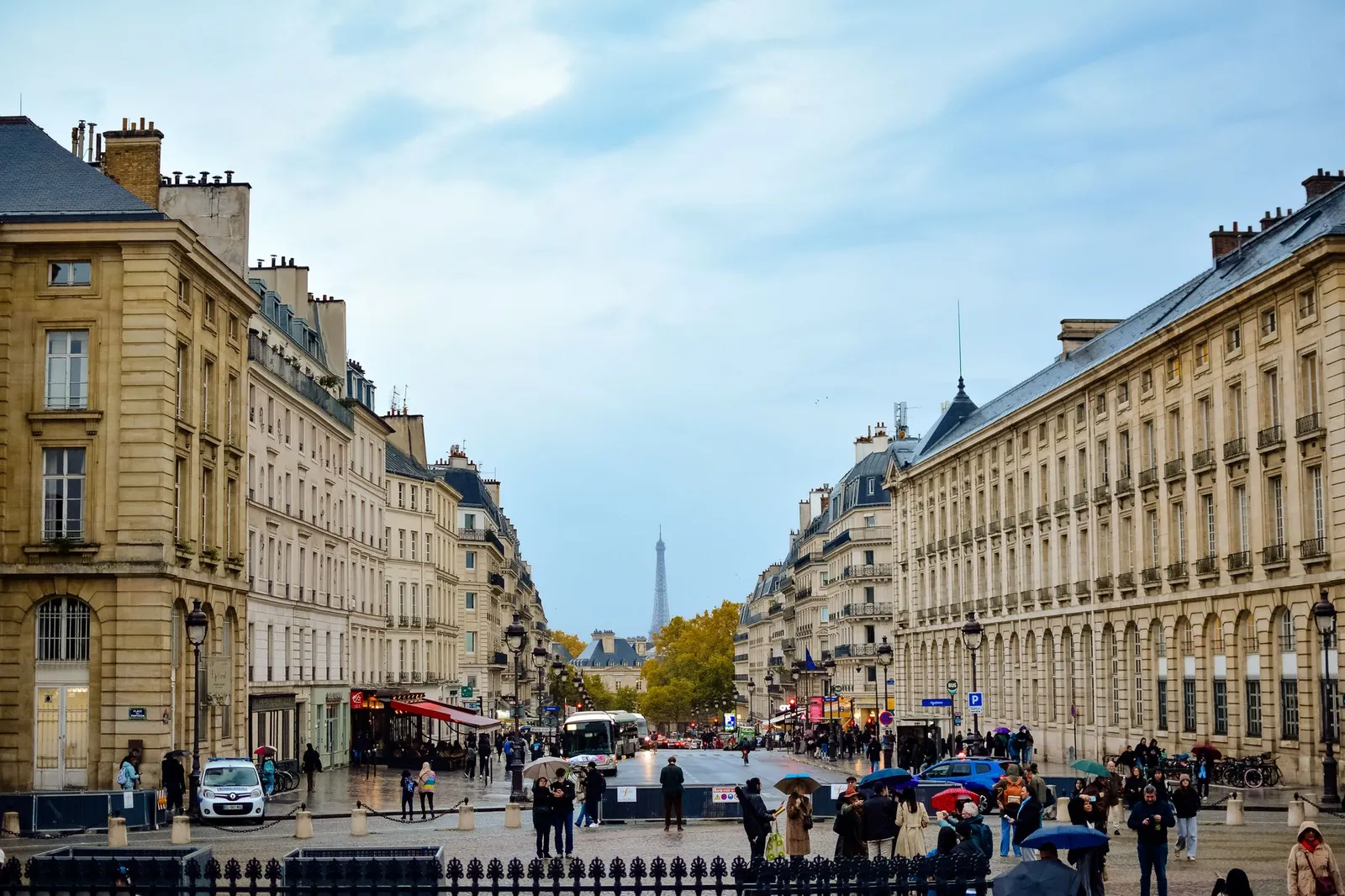
11th Arrondissement: Oberkampf and Bastille
This is where we’ve stayed most often, and it’s the neighborhood we recommend most consistently. Oberkampf has young Parisians, small restaurants with handwritten menus, and bars that don’t cater to tourists. Bastille has the opera, a good weekend market, and easy access to the Canal Saint-Martin. You will see locals buying groceries here.
The breakdown
Hotels cost $87–142 per night; Airbnb one-bedrooms run $76–120. Dinner for one runs $16–24. The metro is five stops to the Louvre, six to Notre-Dame—call it 12–15 minutes door to door. You trade that transit time for $33–55 per night in savings and a neighborhood you’ll actually want to walk around in the evening.
Who it’s for
Budget-conscious travelers, anyone staying four or more nights, people who want to eat and drink where Parisians do. Not for visitors with only 48 hours who need to minimize transit time to the major sights.
8th Arrondissement: Champs-Élysées
The Champs-Élysées is famous and hollow. The avenue runs Zara, H&M, and chain restaurants for most of its length. Hotels cost $220–380 per night for mediocre options. The area empties after 8 p.m. We’ve walked through it; we’ve never stayed here. You’re paying central-Paris prices for zero neighborhood character.
The one exception: if you have a business meeting near the 8th and need to be walking distance, fine. Otherwise, skip it.
16th Arrondissement: Trocadéro
Wealthy, quiet, tree-lined, and 15–20 minutes by metro from anything interesting. The Trocadéro terrace has the best ground-level Eiffel Tower view in the city. That’s the entire case for staying here.
The trade-off
Hotels cost $142–240 per night. Restaurants are scarce and expensive. If the tower view at sunrise matters more than everything else on your trip, the 16th makes sense. If it doesn’t, stay central and visit Trocadéro as a 45-minute detour. Not for anyone with limited time or anyone relying on walking rather than the metro.
The best neighborhood is the one where you’ll actually spend your evening walking around, not one that’s closest to the Louvre.
Our verdict
Budget of $110–165/night, staying 3+ nights: choose the 11th. Budget of $165–220/night and want atmosphere: choose the 6th. Budget above $220/night and staying only two days: choose the 1st or 4th. Tight budget, can handle noise: choose the 5th. Avoid the 8th and 16th unless you have a specific reason—business, a friend’s apartment, or the Trocadéro view as a genuine priority.
| Arrondissement | Budget hotel/night | Airbnb studio/night | Dinner for one | Best for | Main drawback |
|---|---|---|---|---|---|
| 1st (Louvre) | $195–380 | $130–155 | $30–38 | First-timers, 2–3 days | Expensive, dead at night |
| 4th (Marais) | $175–305 | $120–175 | $24–33 | Nightlife, short trips | Crowded, loud |
| 5th (Latin Quarter) | $98–155 | $87–130 | $16–24 | Budget travelers | Noisy until late |
| 6th (Saint-Germain) | $155–195 | $110–165 | $27–38 | Atmosphere + livability | Pricier than 11th |
| 11th (Oberkampf) | $87–142 | $76–120 | $16–24 | Value + real Paris | 12–15 min to major sites |
| 8th (Champs-Élysées) | $220–380 | $153–196 | $33–44 | Business proximity only | No neighborhood life |
| 16th (Trocadéro) | $142–240 | $109–153 | $27–35 | Quiet, Eiffel views | Far from everything |
How to narrow it down
Three filters cut through most of the decision. First, how many nights? Two to three nights, stay central—the transit savings don’t offset the time cost. Four or more nights, you can afford to be in the 11th or 6th. Second, what’s your nightly budget? That eliminates half the options immediately. Third, check the metro map before you book: Lines 1, 4, 6, and 9 are fast and frequent. Lines 3 and 8 are slower. Any apartment on a fast line is more valuable than one that’s geographically closer but requires a transfer.
Frequently asked questions
Is it cheaper to stay outside Paris and commute in?
Sometimes, but rarely worth it. A hotel in Versailles might run $76 per night, but the train is $4.40 round-trip and takes 35–40 minutes each way. You lose roughly 90 minutes of usable time per day. We’ve tried this and regretted it. The 11th or 5th will usually match or beat the outer-suburb price once you factor in transit costs and time.
Should I book a hotel or Airbnb?
Hotels are easier for two to three nights—no cleaning fees, simpler checkout, no key-exchange logistics. Airbnbs make financial sense at five or more nights. In the 11th, a three-night Airbnb at $95/night plus a $27 cleaning fee runs $312 total. A hotel at $109/night is $327. At five nights, the Airbnb is $502 and the hotel is $545—and you have a kitchen, which cuts at least one restaurant meal per day.
What if I want to be near Montmartre or the Eiffel Tower?
Montmartre is the 18th arrondissement—charming, genuinely hilly, and 10–15 minutes by metro from better-connected neighborhoods. Stay there only if exploring Montmartre itself is a primary goal, not just a stop on your list. The Eiffel Tower sits on the border of the 7th and 16th—both quiet and residential. If watching the tower light up from your window matters more than everything else, the 16th is defensible. Otherwise, visit as a half-day trip from wherever you’re based.
Do I need to book accommodation in advance?
Yes, especially April through September and the first two weeks of December. Last-minute bookings in high season run 20–40 percent more, and the better-value options in the 11th and 6th fill first. Book six to eight weeks ahead for summer. January through March (outside French school holidays) gives you more flexibility—prices drop and availability opens up.
Is the metro safe at night?
Yes, up to about midnight. Trains are busy until 11 p.m. and we’ve used them alone at 10 p.m. without issue. After midnight, the cars thin out and the last trains attract a rougher mix. After midnight, take a taxi or Uber—it runs $13–20 depending on distance and is worth it.

Tomas is a former airline route planner who now writes about fares, airports and getting there without the drama.