This article may contain affiliate links. If you buy through them we may earn a commission at no extra cost to you.
Fly into Marrakech, spend two days there, take the bus to Fez for two more, then finish in Casablanca before your flight home. That loop covers the medina experience, imperial history, and the Atlantic coast in seven days without doubling back. We’ve run this route twice and trimmed everything that didn’t pull its weight.
The Route: Why This Order Works
Marrakech is the main international hub; Casablanca is the easiest exit point. Starting anywhere else adds a redundant transfer. The total distance is roughly 400 miles, but Marrakech to Fez runs 9–10 hours by road—longer than the map suggests. Fez to Casablanca is 5–6 hours.
If you’re not renting a car, CTM and Supratours buses are reliable and cheap. Grand taxis (shared minibuses) are faster on short hops but leave when full, not on schedule—factor that in before you commit.
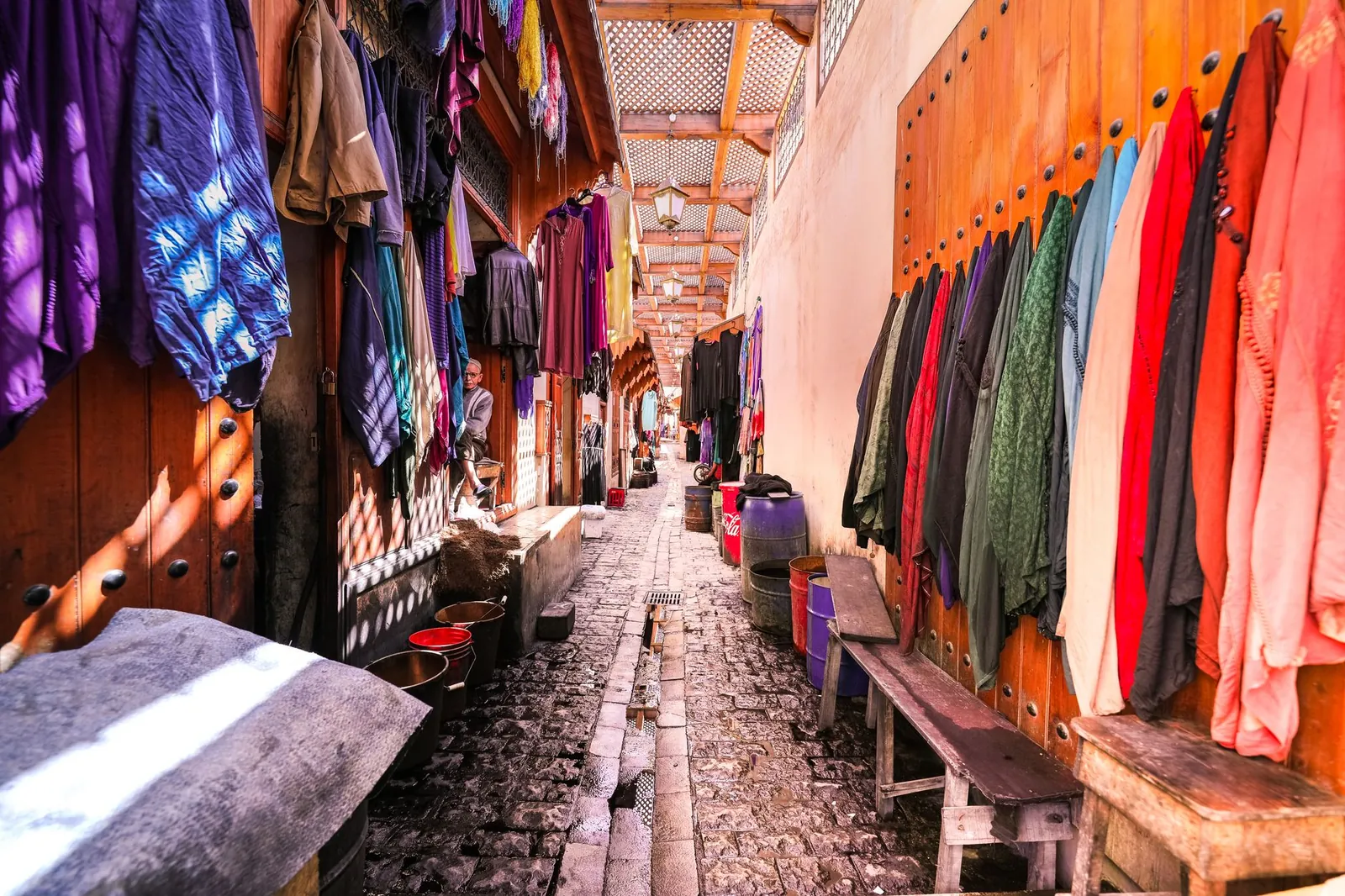
Days 1–2: Marrakech
What to actually do
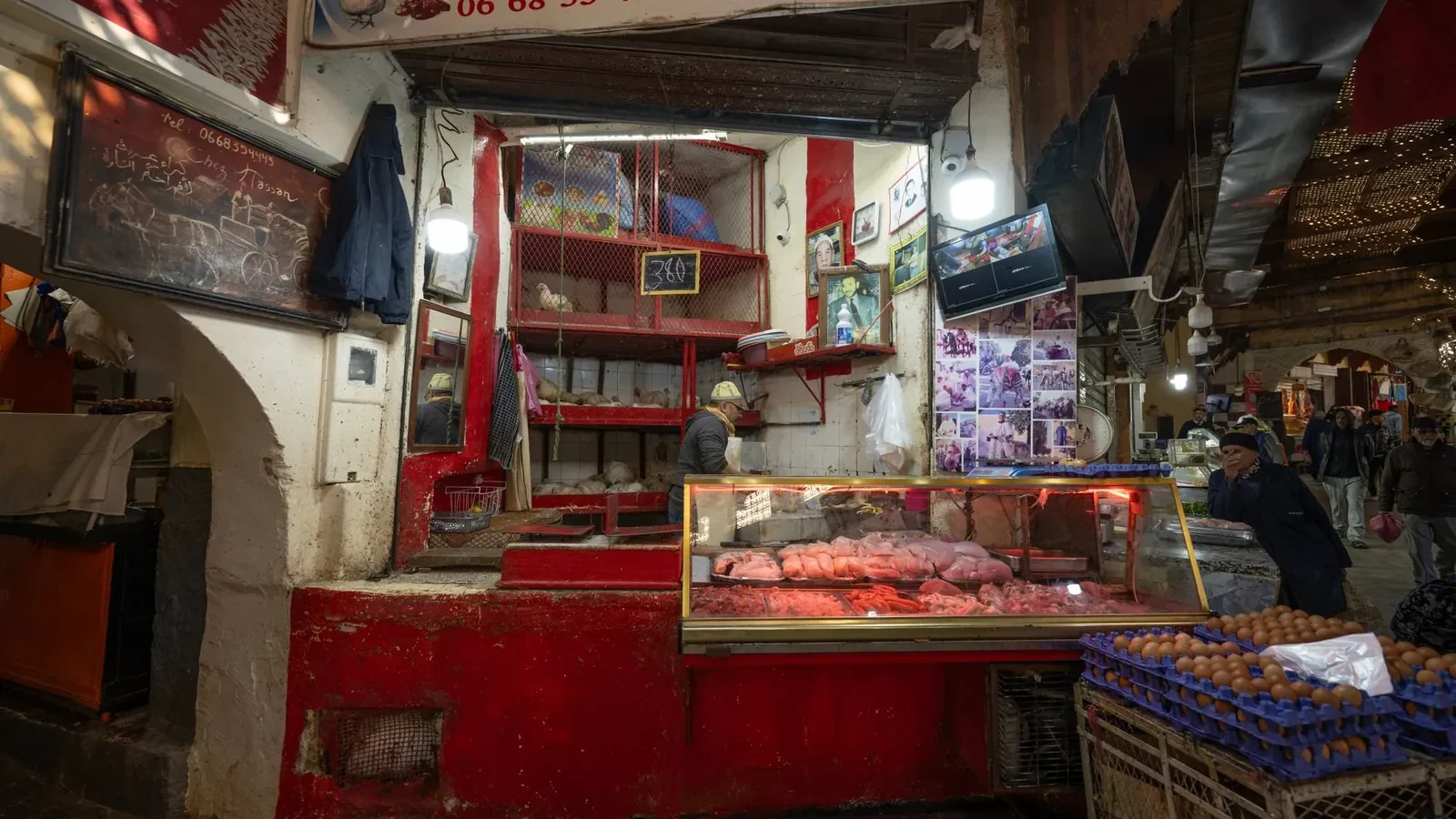
Start in the souks near Djemaa el-Fna before 10 a.m., when the crowds are thinner. You won’t buy much. The point is the noise, the narrow passages, the smell of cumin and leather—this is what the medina is for. Lunch at a hole-in-the-wall tagine spot costs $3–5.
Pick one palace in the afternoon, not two. Bahia Palace ($4 entry) is the most visited for good reason. Koutoubia Mosque is free to view from outside; non-Muslims can’t enter. If the medina is wearing you down by mid-afternoon, Majorelle Garden ($9) is manicured and genuinely quiet—worth it as a reset, not as a highlight.
Day 2 splits into two real options:
- Atlas Mountains day trip: Imlil valley, $40–60 with a guide. Good if you want open air and elevation. Not worth it if you’d rather spend the time in the city.
- Stay in Marrakech: Saadian Tombs ($4) in the morning, then a hammam. A proper hammam costs $8–15; ask your riad to recommend one locals actually use, not the tourist-facing ones near the square.
Where to stay and eat
A mid-range riad runs $50–90 per night and includes breakfast. Book directly with the riad or through Airbnb; booking platform markups add $10–20 per night for the same room. Dinner in the medina—three courses with wine—is $12–18.
Skip the “cooking class” tours unless you genuinely want to learn. Most run three hours for $35 and end in a spice shop with a sales pitch.
Days 3–4: Fez
Getting there
Book a daytime CTM or Supratours bus the evening before—seats go fast in high season. Buses leave 6–8 a.m. and arrive around 4–6 p.m. Cost: $15–25. A private driver costs $80–120 for the day and lets you stop in Meknes (halfway, about an hour’s detour). Most travelers skip it to protect the afternoon in Fez; we’d agree unless Roman history is a priority for you.
What to actually do
Fez’s medina is larger and less tourist-worn than Marrakech’s. Hire a local guide for a half-day ($20–30, arranged through your riad). Without one, you will loop in circles—the streets have no grid and no logic visible from street level. A guide takes you through the tanneries, the carpet workshops, and the 9th-century university at Al-Qarawiyyin. Lunch: $4–7 at a local spot.
Day 4: Bab Boujloud gate and the Jewish quarter take a relaxed morning. Alternatively, hire a driver for Volubilis—Roman ruins 45 minutes out, $50–70 round trip. Volubilis is worth the detour if you like archaeology; if mosaics in an open field don’t excite you, stay in Fez and end the afternoon at a rooftop café overlooking the medina.
Where to stay and eat
Riads in Fez run $40–70 per night—cheaper than Marrakech for comparable quality. Order pastilla if it’s on the menu: a savory pastry with spiced meat, local and excellent.
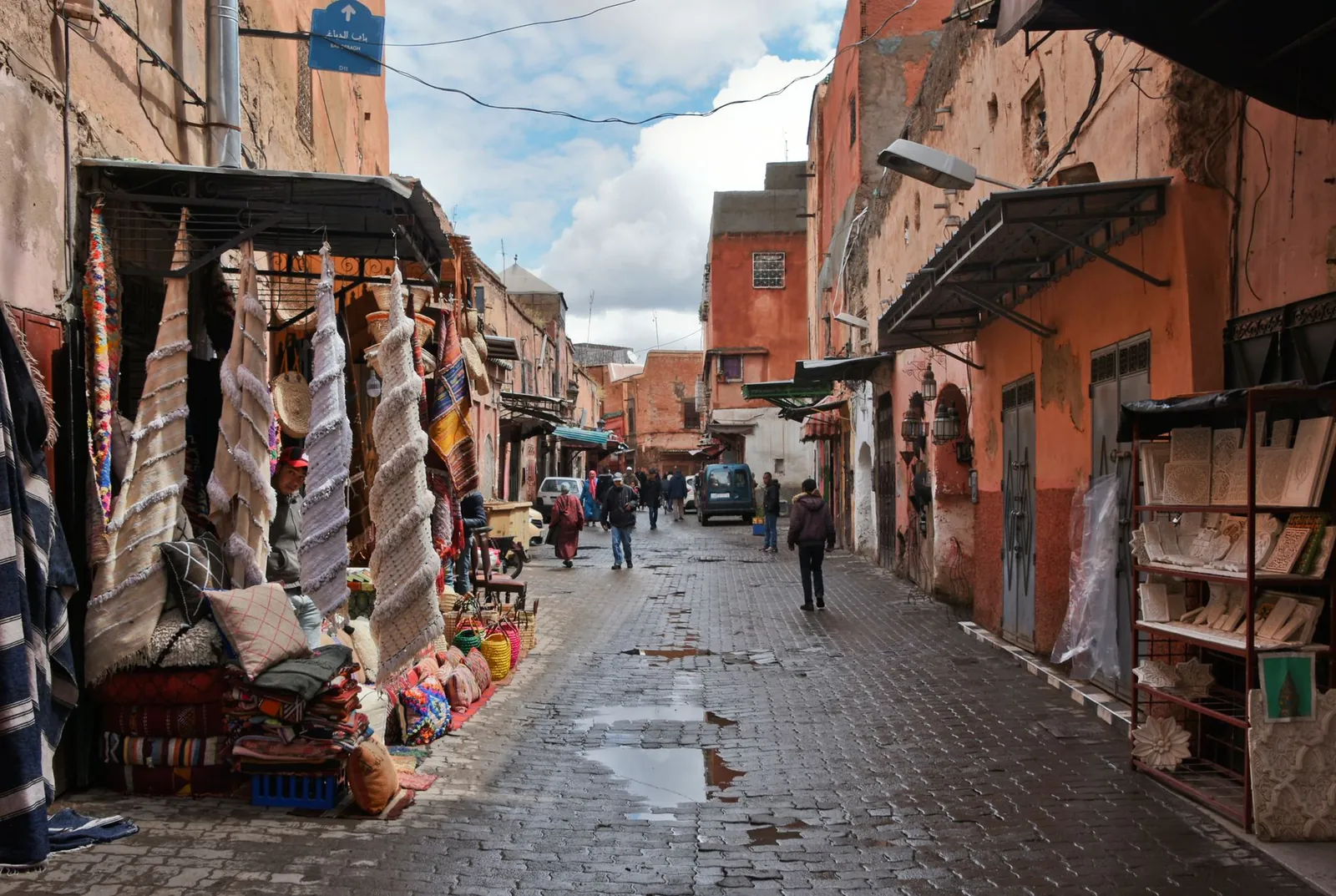
Days 5–6: Casablanca
Getting there
Bus from Fez, 5–6 hours, $12–18. Arrive mid-afternoon with time to settle before dinner.
What to actually do
Hassan II Mosque is the main reason to be here. It sits directly on the Atlantic, holds 25,000 worshippers, and has a retractable roof—the scale is genuinely striking. Entry for non-Muslims is $10; guided tours run 90 minutes. Go early; tour groups arrive in force by 10 a.m.
The medina is smaller and more residential than Marrakech’s or Fez’s—worth a walk, but don’t expect souks or palace architecture. Casablanca’s real value is the pace. Spend an afternoon on the Corniche (the Atlantic waterfront), drink mint tea at $2 a glass, and let the trip decompress.
Essaouira, a windswept coastal town 90 minutes south, is worth a day if you have a car. By bus it’s $8 each way and eats most of the day in transit—only do it if Casablanca has given you everything it has.
Where to stay and eat
Standard hotels (not riads) run $45–75 per night. A seafood dinner with wine on the Corniche costs $15–25.
Day 7: Depart
Most Casablanca flights leave afternoon or evening, leaving a morning free for a last café stop. If you’re flying out of Marrakech instead, you’ll need to fly back ($60–100, one hour) or face a 9-hour drive—neither is ideal. Plan your exit city before you book.
Costs and Logistics
Budget breakdown (per person, mid-range)
| Category | Estimated Cost (USD) |
|---|---|
| Accommodation (7 nights, riads/hotels) | $350–500 |
| Meals (breakfast included, lunch/dinner out) | $150–200 |
| Buses and ground transport | $50–80 |
| Guides, entrance fees, activities | $80–150 |
| Total | $630–930 |
Flying Marrakech to Fez instead of busing adds $60–100 per person but recovers a full day. Budget travelers staying in hostels ($20–30/night) and eating street food can bring the total to $450–600.
Transportation trade-offs
Bus (CTM/Supratours): $12–25 per journey. Reliable, slow on long routes. Book the evening before.
Grand taxi: $15–30, faster than bus, leaves when full. Worth it for short hops like Fez to Meknes; not worth the uncertainty on longer routes.
Private driver: $60–120 per day. Makes sense when splitting costs with two or three others, or when you want to stop mid-route. Not essential on this itinerary.
Rental car: $30–50 per day. Main routes are manageable; city driving is chaotic and medina parking is nearly impossible. Only rent if you’re comfortable with unmarked hazards and aggressive traffic.
What to Skip
Camel rides in Marrakech (animals are often stressed; the experience lasts ten minutes). Organized food tours in the medinas (slow, overpriced, and you’ll eat better on your own for a fifth of the cost). The Sahara from this itinerary—it requires 2+ extra days and at minimum one additional flight. Tourist-facing hammams near Djemaa el-Fna. And any souvenir shop where the vendor followed you in from the street.
Frequently Asked Questions
Is 7 days enough for Morocco?
For this three-city route, yes. You’ll have time to absorb each place without rushing. Adding the Sahara, a full Atlas trek, or Essaouira properly pushes the minimum to 10–12 days. Seven days works if you resist over-scheduling day trips.
What’s the best time to visit?
October–November and March–April. June–August temperatures in the medinas regularly exceed 95°F, and the crowds are at their peak. December–February is cooler but can be wet. Ramadan (dates shift annually) means shorter restaurant hours and a quieter tourist atmosphere—some travelers prefer it, others find the logistics frustrating.
Do I need a guide?
In Fez, hire one for at least a half-day—the medina is genuinely disorienting and a guide saves two hours of backtracking. In Marrakech, a guide helps but isn’t essential. In Casablanca, skip it. Expect to pay $20–40 for a half-day, arranged through your riad.
Is it safe to travel alone?
Yes. Serious crime against tourists is rare. Solo women travelers may encounter persistent vendors and low-level harassment in crowded souks—it’s more tiring than threatening, but worth knowing before you go. Stay aware in busy markets and avoid unfamiliar areas late at night.
What should I pack?
Comfortable walking shoes—medina streets are uneven stone and will punish anything with a heel. Light layers for cool mornings and evenings. A scarf or loose clothing for mosques and conservative neighborhoods. Sunscreen. A small daypack. Leave anything you’d regret losing at the riad; bring a passport copy instead of the original into the souks.
Maya has spent twelve years writing about travel, from budget backpacking to family resorts, and still packs too many socks.