This article may contain affiliate links. If you buy through them we may earn a commission at no extra cost to you.
If you have one trip and need to pick one island, start with Crete—it has the most variety, the most honest prices, and enough room to feel like Greece rather than a theme park version of it. Santorini is worth the money only if the caldera view is the specific thing you came for. Everything else depends on what you’re willing to pay and how much company you want.
Santorini: The Iconic View, at a Price
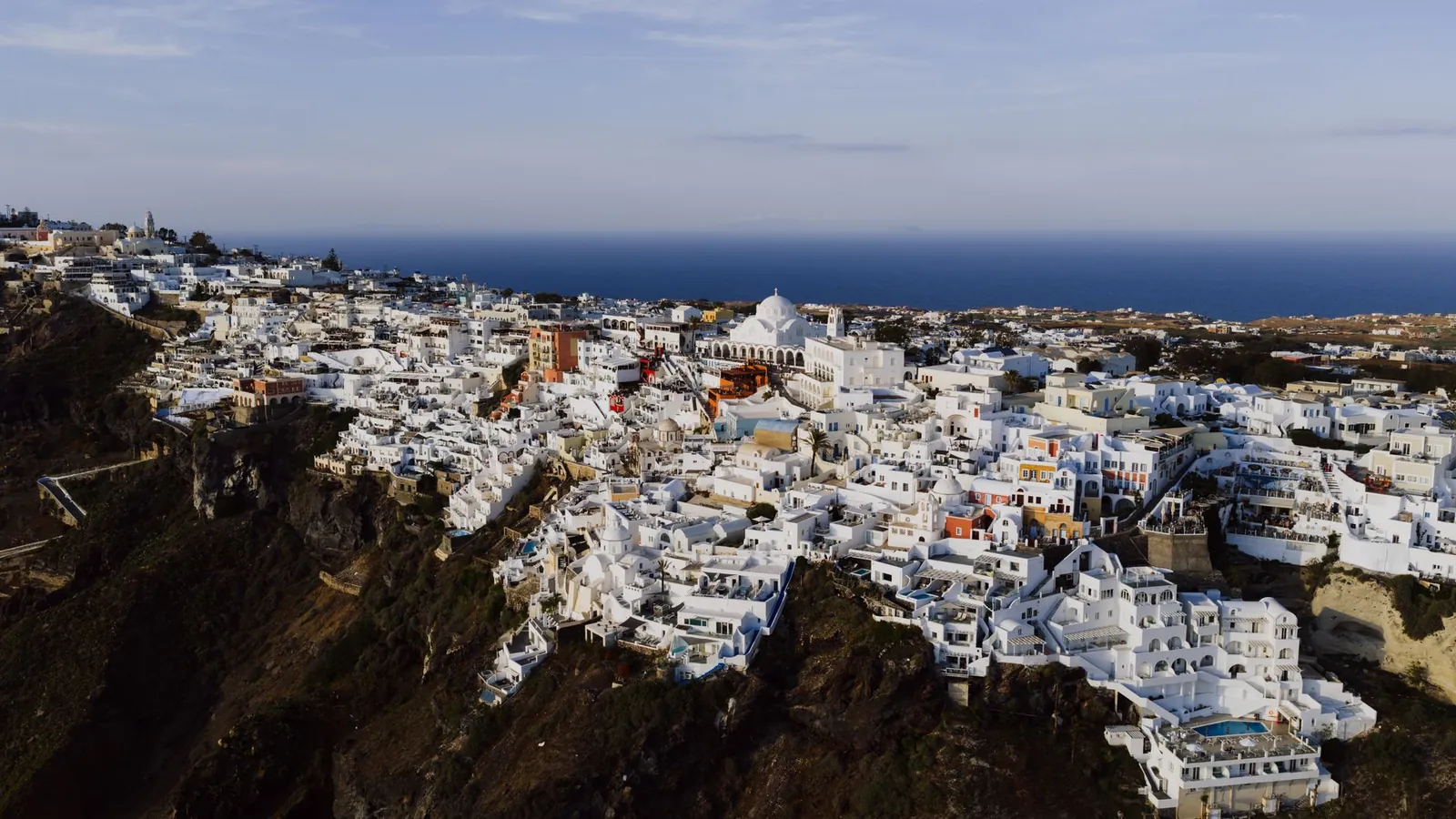
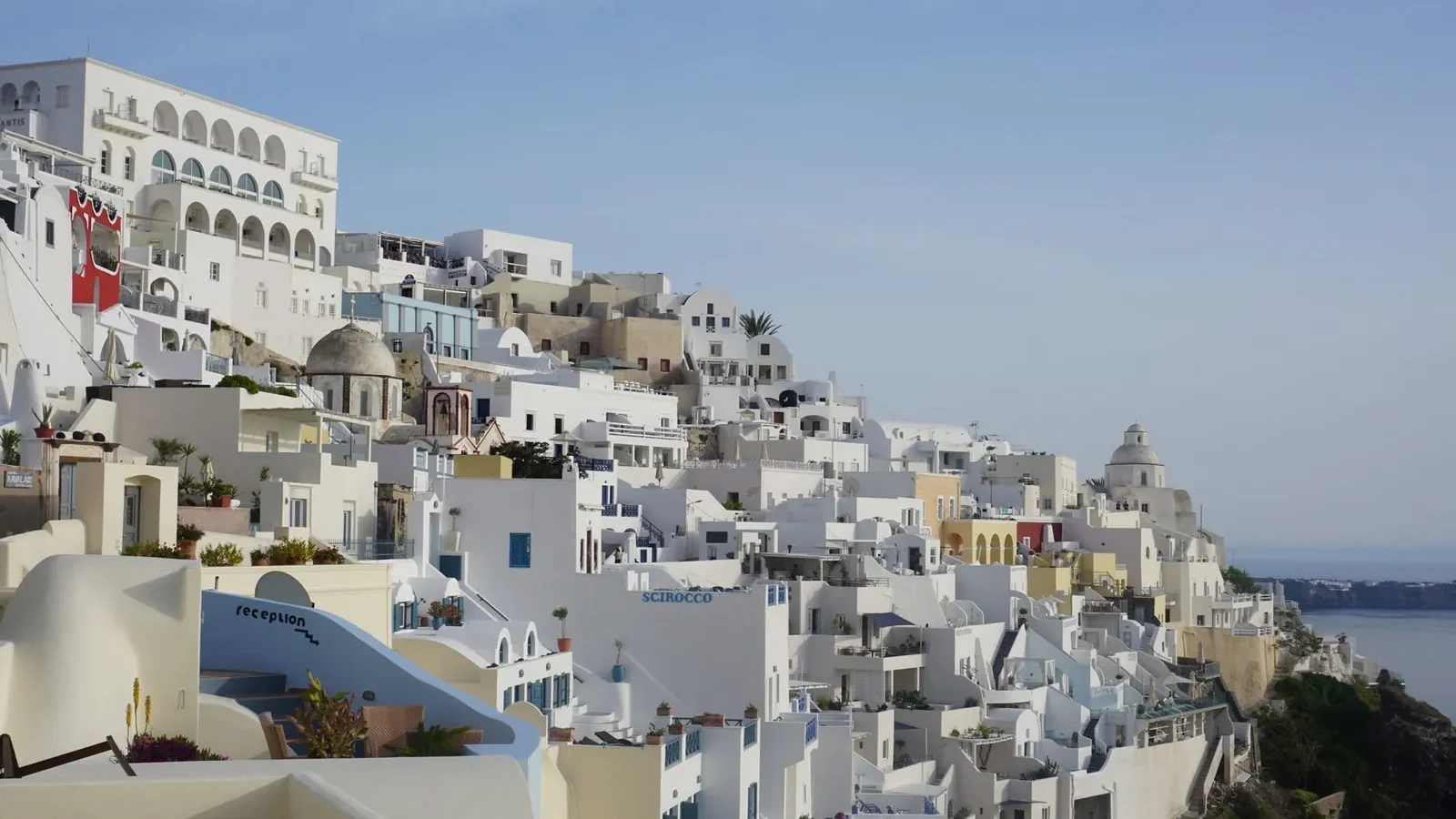
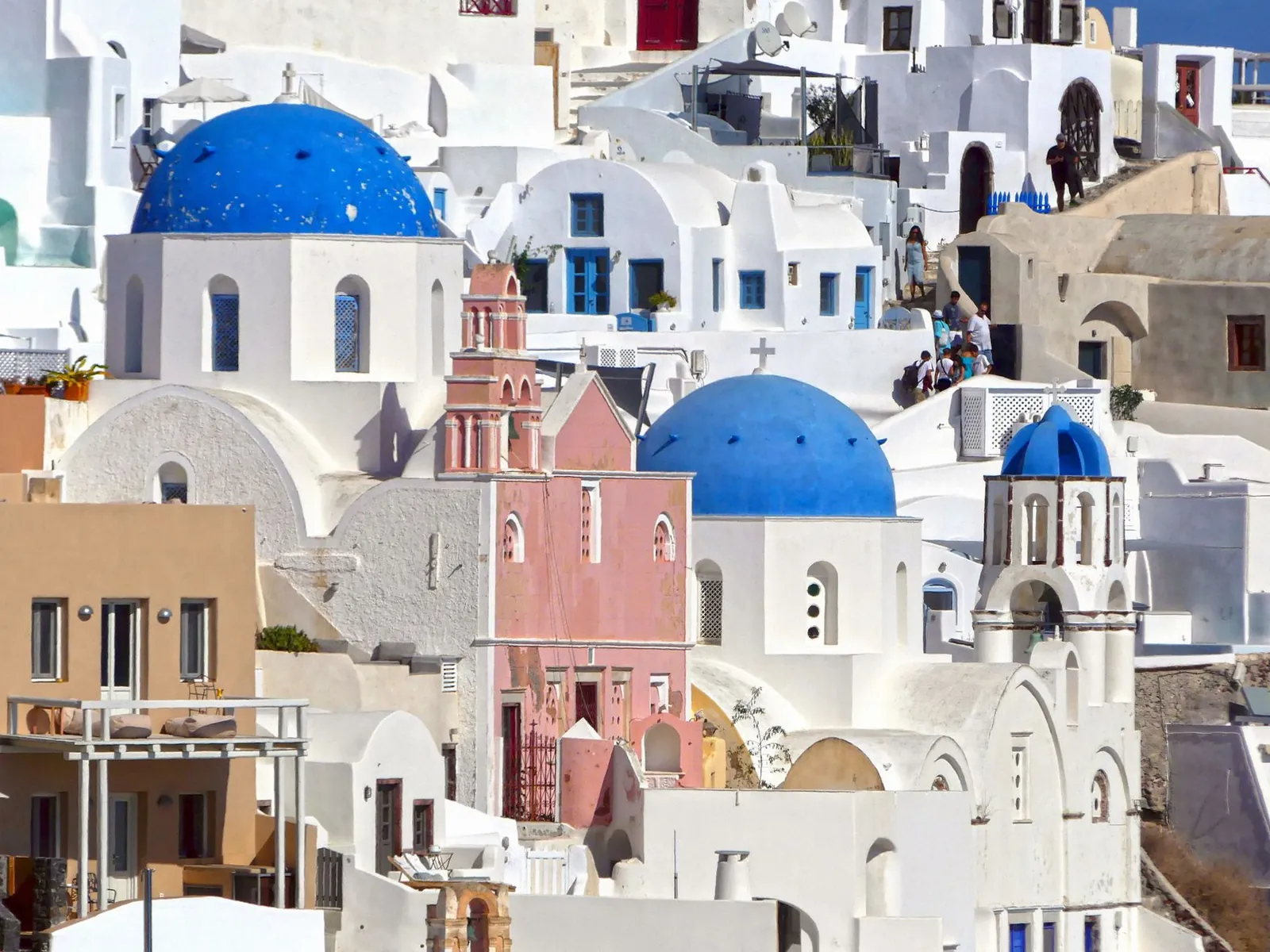
The caldera views are real and they don’t disappoint—white-cube villages on volcanic cliffs, blue domes, water that actually looks that color. We went in May and paid $180–220 per night for a basic room in Oia. July and August push the same room to $300–500. Dinner for two at a waterfront restaurant runs $50–80; local tavernas are $25–35 if you walk two streets back from the view.
The real cost is the crowds. Oia’s main street stops every ten steps for someone’s photo shoot. The famous sunset spot fills up by 6 p.m.—arrive by 5 or watch from the island’s quieter east side instead. Neither option is bad; both require planning you won’t expect to need.
Who it’s for
- First-time Greece visitors who want the postcard experience
- Couples with a specific occasion and a flexible budget
- Anyone who can do 3–4 days without needing variety
Who it’s not for
- Budget travelers—the resentment compounds daily
- Families with young children (steep stairs, cliff edges, no flat ground)
- Anyone who came to see how Greeks actually live
Crete: Enough Island to Actually Explore
Crete is the island that functions as a real place. Greeks live here year-round, the food comes from actual farms, and the history goes back to the Minoans—Knossos Palace alone justifies the trip. We stayed in Chania and paid $90–130 per night for a good room. Dinner averaged $20–30 at honest tavernas; eat away from the waterfront and $12–15 covers a full meal.
Give it at least 4–5 days. The north coast is where tourism concentrates; the south is dramatically quieter. We drove to Samaria Gorge on a June morning—a serious 5-hour hike—and had it nearly to ourselves. Balos Lagoon requires a car or a boat trip and is worth both.
What you’ll actually do
- Swim at Balos or Elafonissi (the pink-sand beach is real, not a filter)
- Walk Chania’s Venetian Old Town without feeling managed
- Hike Samaria Gorge or smaller canyons in the White Mountains
- Visit Knossos Palace near Heraklion—budget a full morning
Mykonos: Party Scene, Nothing Else
Mykonos is built entirely around nightlife and the reputation that surrounds it. Rooms run $150–250 in shoulder season, $300–400 in summer. A cocktail costs $15–18. The clubs—Cavo Paradiso, Paradise Club—deliver what they promise if that’s your reason for going. The gay-friendly scene is genuine and well-established. We stayed one night and left; the island felt like work rather than a holiday.
Mykonos Town is photogenic but operates as a stage set by day. The beaches are good. If nightlife isn’t your primary goal, the price-to-experience ratio is the worst of any island on this list.
Choose based on what you want to do when you’re not taking photos, not on what looks best in them.
Rhodes: Medieval History Without the Elbow Room Problem
Rhodes sits in the southeastern Dodecanese and packs more layered history than any other island here. The Medieval Old Town is a UNESCO site that actually functions—people live and eat there, not just tour it. We paid $110–160 per night for central accommodation and found solid meals at $18–28. The Palace of Grand Masters, the Street of the Knights, and the ancient ruins at Lindos are substantial enough to fill three days without feeling rushed.
The island is larger than it looks on a map: pine forests, mountains, and beaches exist well beyond the resort sprawl on the east coast. Avoid that east coast strip if you want character. Stay in the Old Town, or take the short boat ride to Symi—a smaller island that rewards the detour. Rhodes requires more planning than Crete to get the best of it, but the ceiling is high.
Naxos: The One We’d Send a Smart Traveler First
Naxos is where we’d send someone who wants Greece without the markup. Rooms cost $70–110 per night even in July. Dinner for two runs $20–28 at proper restaurants. The main town, Chora, has a working port, a Venetian kastro, and bakeries that open at 7 a.m. for locals, not tourists. The island produces its own cheese, wine, and potatoes—you taste the difference.
The trade-offs are real: fewer direct flights, fewer English speakers outside town, and beaches that are good but not dramatic. The pace is genuinely slow. We spent five days and felt no pull toward Santorini. For island-hopping, Naxos works as a base—ferries connect to Mykonos, Delos, and the rest of the Cyclades.
Why Naxos works as a base
- Central Cyclades ferry connections to Mykonos, Paros, and Delos
- Actual local food culture: Graviera cheese, Kitron liqueur, local wine
- Windsurfing and kitesurfing at Mikri Vigla beach
- Half the nightly cost of Santorini or Mykonos with comparable amenities
Comparison Table
| Island | Budget (per night) | Crowds | Best for | Days needed |
|---|---|---|---|---|
| Santorini | $180–500 | Very high | Icon-chasing, couples | 3–4 |
| Crete | $90–150 | Medium | Hiking, history, variety | 4–5 |
| Mykonos | $150–400 | Very high | Nightlife, party scene | 2–3 |
| Rhodes | $110–180 | Medium | Medieval history, exploration | 3–4 |
| Naxos | $70–120 | Low | Budget travelers, quiet time | 4–5 |
Our verdict
Four days, first Greek island: go to Crete. It has enough variety to survive a bad weather day, enough history to justify the flight, and prices that don’t punish curiosity. Santorini earns its place only if the caldera view is the specific reason you booked—go in May, budget $200+ per night, and accept the crowds as part of the deal. Naxos is the right answer for anyone who wants to spend less and slow down. Skip Mykonos unless the clubs are the point; you’ll pay double for an experience Athens or Barcelona does better.
Frequently asked questions
When’s the best time to visit Greek islands?
May and September offer warm weather (75–85°F), manageable crowds, and lower prices than July–August. June is a sweet spot if you can swing it. October is still swimmable but weather becomes unpredictable. December through March sees closures, rough seas, and limited ferries. Avoid August unless you enjoy peak crowds and peak prices.
Do I need a car on the islands?
It depends. Santorini and Mykonos are walkable with good bus systems; a car adds stress and cost. Crete and Rhodes benefit from a rental (3–4 days, $30–50 per day) if you want to explore beyond towns. Naxos is manageable without one, but a scooter ($15–25 per day) opens up beaches. Book ahead in July–August.
How do ferries work between islands?
High-speed ferries connect major islands; journey times range from 30 minutes to 3 hours. Ferries run year-round but frequency drops outside summer. Book online through Ferryhopper or direct with operators like Minoan Lines. Expect $20–50 per person depending on distance. Summer ferries fill up; book a day or two ahead.
Is it cheaper to visit multiple islands or stay in one?
Staying on one island saves money on ferry tickets and accommodation switching costs. A ferry pass valid for 3–7 days ($80–200) makes island-hopping viable if you’re in the Cyclades. On a week-long trip, two islands is the practical maximum—more than that and you spend half your time in transit.
What’s the actual cost of a Greek island week?
Budget $1,200–1,600 per person for a week—accommodation, food, local transport, and activities—if you stay in mid-range hotels and eat where locals eat. Santorini alone can push that to $2,000–2,500. Crete or Naxos keeps you closer to $1,200–1,400. Flights from the US typically run $600–900 depending on season and how far ahead you book.

Maya has spent twelve years writing about travel, from budget backpacking to family resorts, and still packs too many socks.